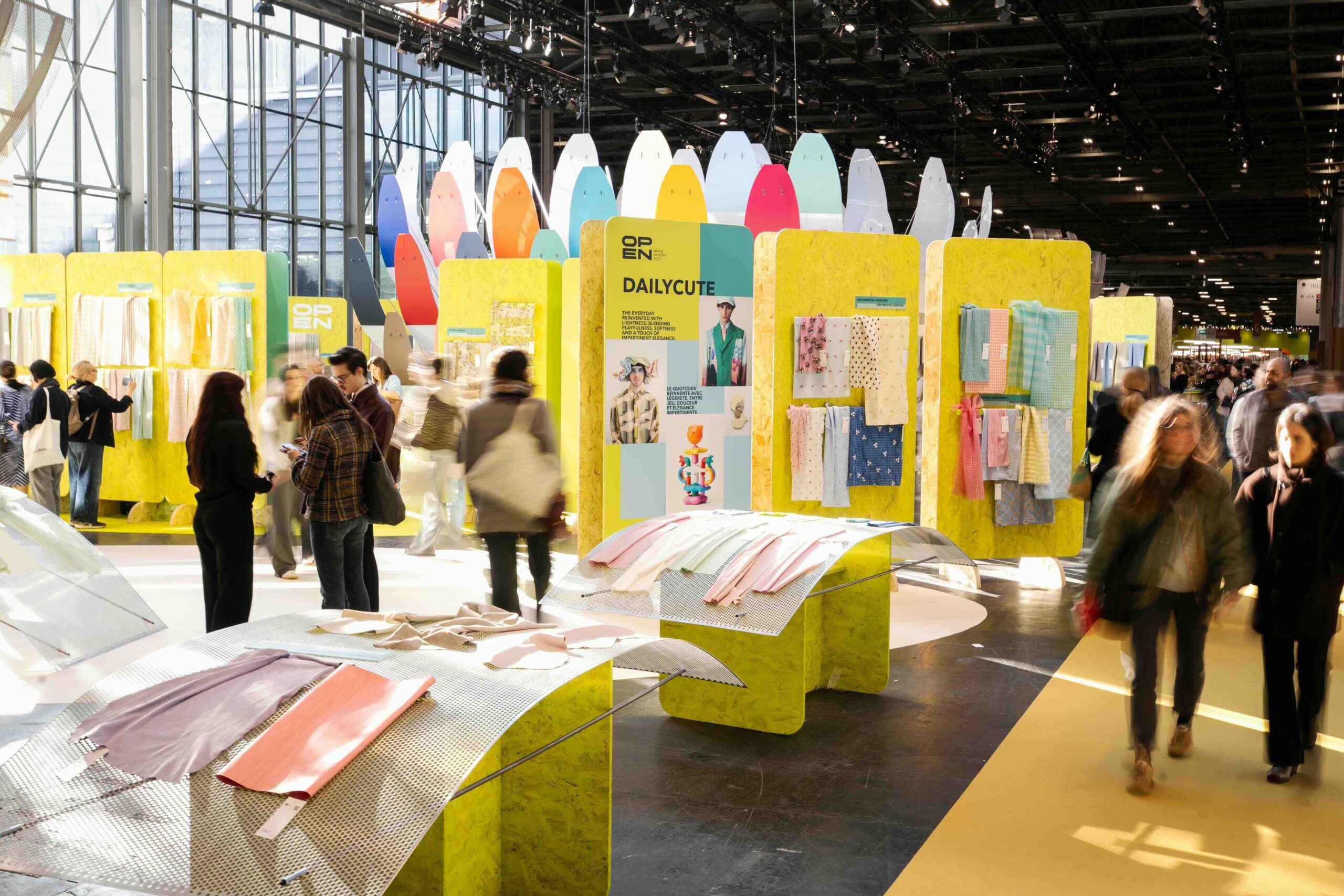


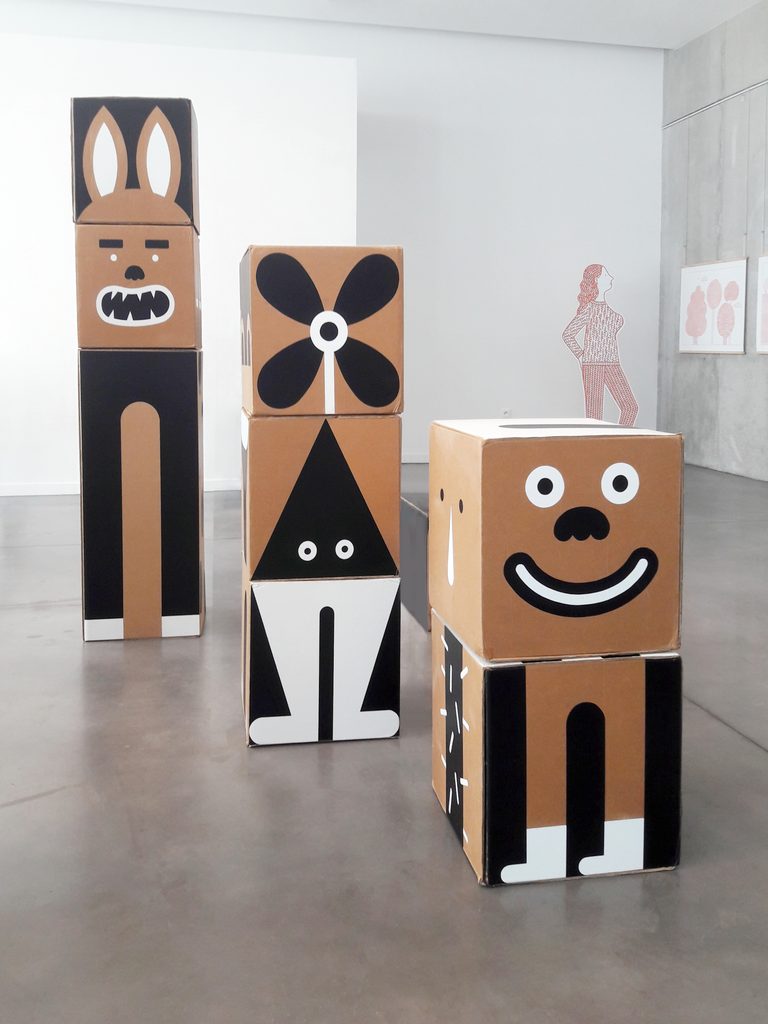
This fall, Edelkoort and Fimmano presents the Inner Child: Playing with Design exhibition at Artipelag outside of Stockholm. The work, Edelkoort explains, started with a forecast of trends for fashion and design.
— We felt that this forecast might be more important than we initially thought, she says. We felt the need to make it concrete and come alive as an exhibition, like a three-dimensional version of a trend book.
— It’s a global research; the designers come from all over the world, says Fimmano. There are many Nordic designers in the show, from Sweden, Denmark and Norway, Finland, and Iceland, says Fimmano. He continues:
– In the initial trend forecast, we had discovered that there were already many designers out there, working in this more playful, optimistic way. But in the research, we also found that there were many more, and when we started talking to them, we realised that they all had similar experiences. Some were working together in teams, others were already parents themselves, others were graduates from school, so much younger.
– What they all have in common is that they used the channelling of their inner child to access a different kind of creativity, which is maybe not part of what the mainstream education system would have given them, or what mainstream consumption and design would expect of them. But they found their way, and they’re much happier in the process, so they gain joy. Their main purpose in life is to be happy through the work they’re doing. They don’t have egos. They’re not really there to design luxury products or to become rich and famous. They’re really designing from the heart and their inner creativity and intuition.
Have you learned stuff from this research, speaking to those designers, for your daily operations as well?
— It has made us happy, says Edelkoort, because we’ve been working on it since the beginning of this year. It has obviously been a very difficult year, but this has made us truly content and happy sometimes. It was like therapy. Hopefully, it will, therefore, also be a therapy for the visitor to somehow gain confidence, rethink their intuition, re-feel their connection with their childhood years, reopening old books to write new stories and so on.
— In fact, Fimmano continues, whenever anybody sees the objects in the exhibition, the images, and they see what’s coming, they straightaway say that, ‘Oh, I just want to go home and start making something, or start reimagining something, or reinventing.’ It gives you the incentive to reignite your creativity and your inner spirit, and inner child.
In these times of AI, can you say that playful design is more important than ever?
— Yes. It’s almost like a new logic, Edelkoort agrees.
How?
— That it’s a logical way to create, to construct, to manufacture. It’s a simple way of embedding things. It’s no screw, no glue, basically manufactured almost like children’s goods, because it has to be safe. There is something very naive there.
– Yes. I think that there is a democratic process in here as well, because there is a backlash against luxury and billionaires at large. The sickening awareness that we are ruled by the ‘Silicon Six’ means that people are waking up to other venues, other ways, other lanes, and thought processes. All in all, I’m mildly optimistic now.
Hopefully, we might have surpassed the worst.
– I’m not sure, but sometimes it seems that there are turnaround movements.
What are the signs?
— Zelenskyj becoming the weapon dealer of Europe. Who would have thought? Edelkoort asks. Getting completely ridiculed by the American administration and then becoming such an important figurehead of the European defence industry. It’s like an unheard-of turn of events, and I think we will see more of them.
— Even just in general, Fimmano continues, European countries are voting left in a reaction to America voting right and saying, we’re going to recalibrate our European values and not become like America. There are all of these major reactions happening, including against technology and luxury, which is part of a movement towards a simpler way of doing things.
— Maybe the big thing is that America will lose its persuasive power, Edelkoort speculates. It’s time that that quite rudimentary culture is not as important as it used to be.
And from an outside perspective, it seems like you turn even more focus to the Global South now in your work. Can you share why and how?
— The reason is that it’s part of a general emancipation process, which includes emancipation of men, of children, of old people, of women, of colour, of making processes and so on. One of them is the growing power of the southern creativity. It has been dormant for 20, 25 years, but they never really dared to dream of jumping on a central stage, Edelkoort shares. She continues:
— Always, when you would go to the south, it felt like speaking to a pressure cooker. All the energy was there, but what? When? And they always needed the Western eye to say, ‘This is beautiful.’ Now, we see that that is shifting, and that they are judging and trying to finance each other. They get empowered to jump on centre stage, hired to make photos for the cover of Vogue, invited for fashion shows in Italy, and become chefs in new restaurants across the world.
— They’re at the centre of the Art Biennale in Venice, and the design week in Milan has much more African and Latin American, even Indian, design influence, says Fimmano.
— It is basically also a process in itself, Edelkoort continues. We can just only tell them, ‘You are ready to go.’ We can tell our audiences, ‘You are ready to embrace and maybe purchase.’ But they need to make the step. They are sometimes in tears, telling me that they always needed the West to like something before their best friend would say they like it.
— Or that they were following trends one season behind, says Fimmano. A common misconception. But this is all part of a decolonialising process, which is happening at all levels of society in the Global South.
— And it’s of course super exciting because you are uncovering so many layers of different creative systems and craft systems, and also collaborative things, ritualisation, and the energy of indigenous making, says Edelkoort. So, it’s a wealth of things we are going to explore in the future.
— There’s a movement in many of these countries to rediscover the periods of modernism, Fimmano explains. But instead of mimicking the ’50s and ’60s, they’re having Brazilian modernism, Indian modernism, and Nigerian modernism. There’s a local interpretation of what modernism means today.
— It’s very enlightening as a movement, says Edelkoort. The North is quite bloodless because marketing has completely stifled creation. We are endemic. So it’s good to have colour, shape, and exuberance to also wake us up. We are almost in need of that shot of inspiration, I think.
Edelkoort and Fimmano have also initiated The World Hope Forum, holding lectures for free every month with six to eight speakers on subjects of good things: good for people, good for animals, good for the climate, good for nature, good for food, good for health, good whatever. People who turn their lives around and witness how that works.
— This is to create a community in the world which is more hopeful and knows that we can have another world if we want it. It’s all examples of how people are thriving, doing great things, Edelkoort explains.
— It’s using hope and optimism as a new currency instead of fear and profits, says Fimmano. It’s a different business model because you can get paid also in joy, and you can get paid in satisfaction and in kindness and in just being happy. During the exhibition, there will be a special edition of Hope Forum on the inner child, an international webinar with all speakers on the subject. The World Hope Forum has become an open-source library of hope.
What’s your outside perspective on Scandinavia in 2026? Ups and downs, advantages and challenges.
– There’s this interest in reconnecting and reteaching people in a more Scandinavian way, which is human-centred, says Fimmano. This has a link to tradition and heritage, but is also thinking about the future. That’s a good side. The negative side here, I think, is the economic crisis of inflation, which was already an expensive region to be in and for people to live in. I don’t know how people can survive with the doubling of prices. That’s why we think that socialism is coming back. The discrepancy between the mega wealthy and regular people is too great. It needs to become a bit closer together again. Somehow.
– I would say that the Scandinavian spirit is still alive, says Edelkoort, but it’s a bit snowed under by luxury and travel and all sorts of glamorous ideas which are not necessarily Scandinavian in nature. I see it as dismantling the wrong inferences of this century. This is why I think the ’90s are so successful now, because in the ‘90s, we were discovering Gaia and ecology and nature and were happy to feel like goddesses and whatnot. I think that there is going to be a natural flow back to what is Scandinavian. But maybe somebody should do a study on what it actually is to be Scandinavian.
We have new micro trends on TikTok every week. What is it like to do trend forecasting in 2026?
– It’s the same, Edelkoort explains. What is called trends on TikTok are not trends. It’s just ephemeral little micro differences. Trends, by contrast, are massive movements of mentality and capital and vision and outcome. They’re two different domains, actually. They are not really related. It used to be there also in the past, these small micro trends, but they came from music video clips from MTV and similar. Now, it’s faster because it’s non-existent. It’s just AI. As a retailer, you can’t even think about it because every day, it’s something else.
– The trends are much deeper than that, Fimmano continues. They’re embedded in who we are as a society and in emotions, identities, and desires. It’s not exactly just one influencer’s post that can shift a whole country or society.
– And then now that streetwear has changed and that sneakers are ousted in favour of moccasins and that slim silhouettes are becoming large, it will take another 10 years for large to become mainstream, as it was for slim, Edelkoort states. We come from 25 years of slim; don’t forget. In general, all the boys are still in slim; all politicians are still in slim. Wall Street is still slim, so we have a long way to go. It’s like with new car design; you need time to develop a taste for new shapes. Young people adapt very quickly, but older generations don’t. So these trends need a lot of time. Whoever now says that slim is back is completely wrong. It’s not even there yet. These things need to grow.