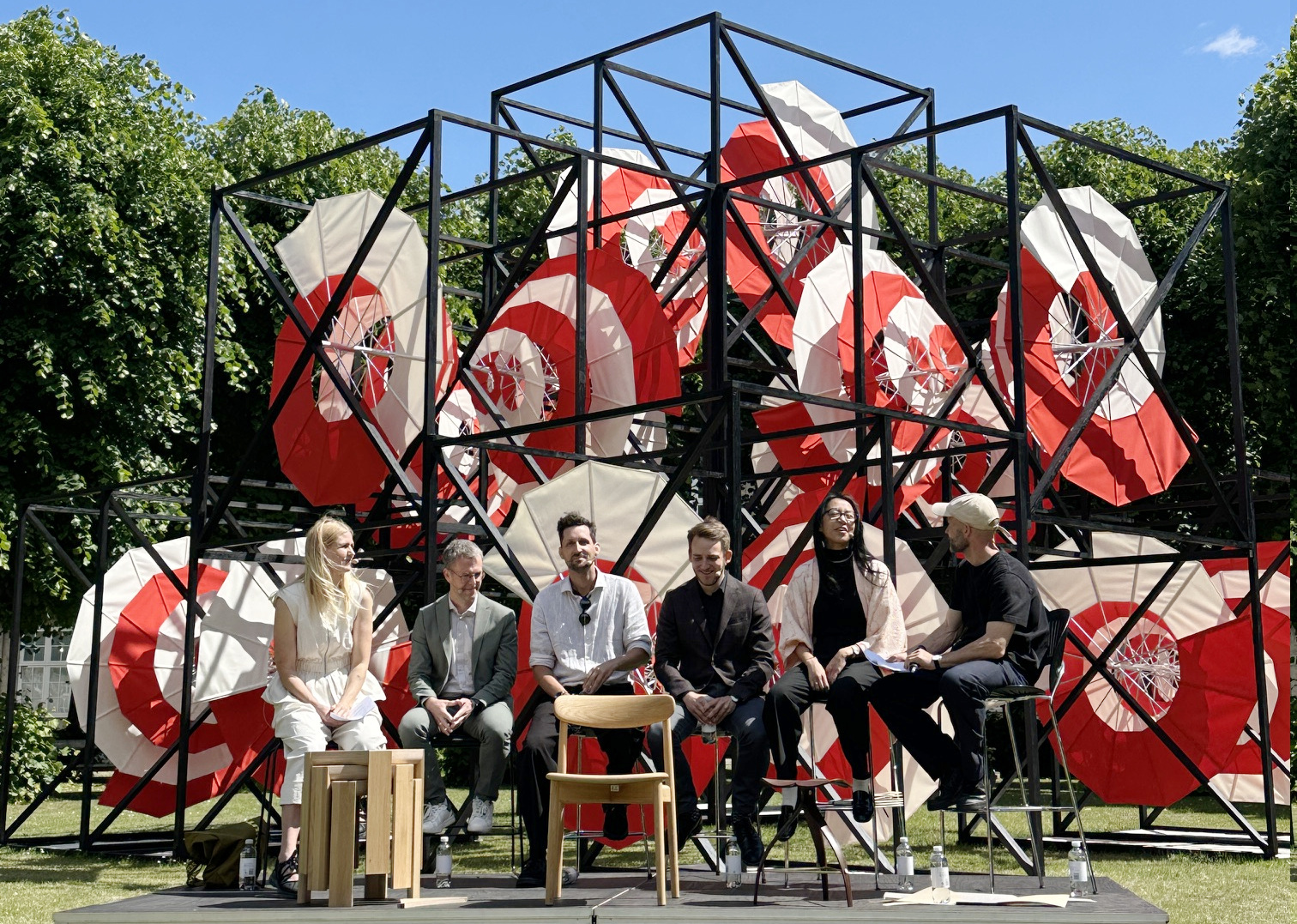


Copenhagen-based Mater was established 20 years ago with the ambition to do more responsible and circular production, and has developed over time.
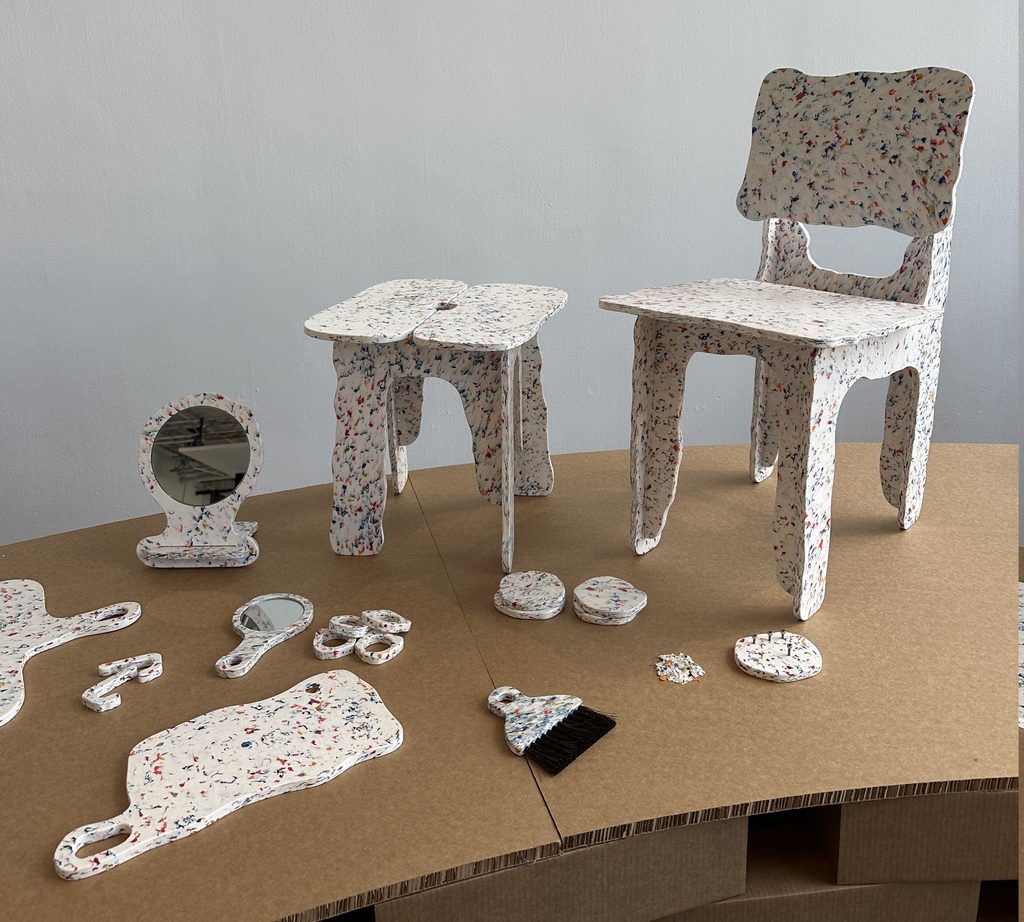
— We started as a more traditional design venture, but today we see ourselves as a green tech company, Head of Marketing, Trine Egelberg, explains. Six years ago, we started to develop our own material, which we call Matec, that can be used as an application for furniture. It’s a binder and a fibre, which are mixed in a thermokinetic machine and create a big mould that can be press-formed just like with normal furniture.
– The binder is e-waste, the plastic parts of electronic devices like a mobile phone or fridges. It’s mixed with a fibre, which can be coffee shell waste—the shell from a coffee bean—or sawdust from wood production.
— Two years ago, we did a collaboration with Patricia Urquiola, and she had an ambition of doing a biodegradable version. For that product, a table, we used a biodegradable plastic material made from sugar cane instead of e-waste, and still mixed with the coffee shell waste or sawdust material.
— It has been a journey going from a small size for the first product we did in Matec, where we had the limitation of a very small mould. After that, developing to do curves and different shapes. Last year, we got a new machine so that we’re able to do the big desktop, which we’re launching now.
Have you also conducted LCAs to compare Matec with conventional materials?
— We do have LCAs. They’re not verified yet, but we are working on that. The issue is that it’s an unknown material, so until now, we have used the same calculation as for virgin material. That’s something we need to learn and improve, and continue to work on.
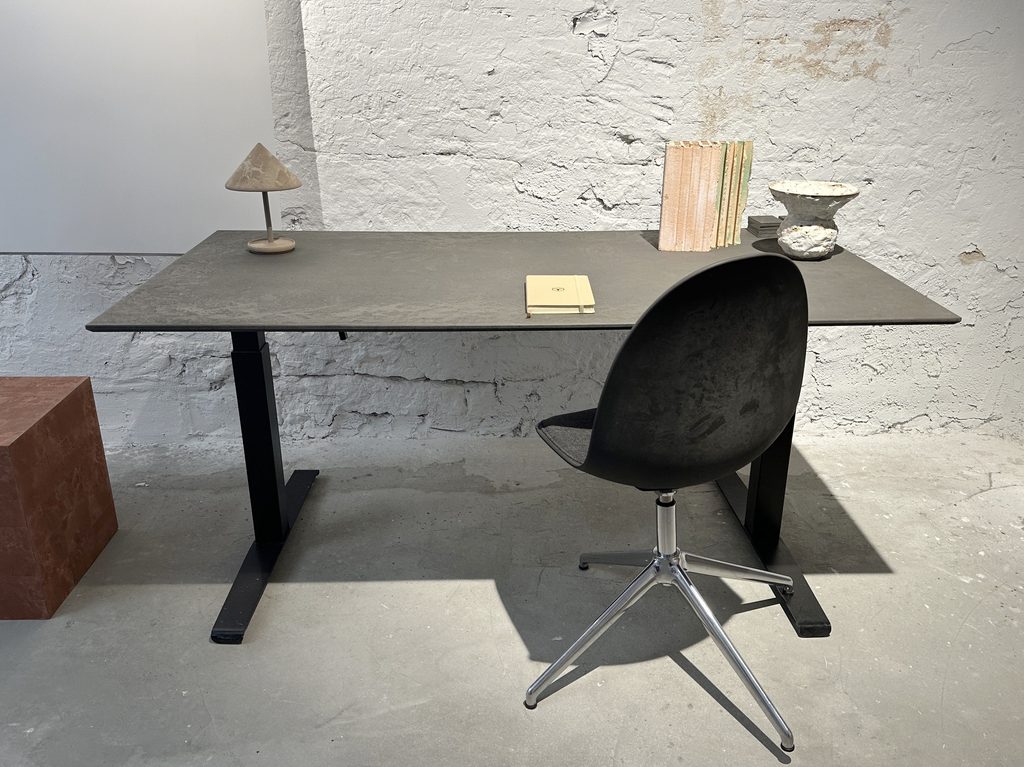
For 3daysofdesign, roof window and skylight company VELUX and fashion label Pas Normal Studios highlighted how daylight shapes our lives. Located in the latter’s Nordhavn HQ, a special exhibition featured Danish visual artist Christina Augustesen’s poetic sculpture installations, where shifting colours and reflections revealed how light influences our perception and space.
– It presents a series of sculptures titled Daylight Instruments, which come to life and take their expression from daylight, Augustesen explains. The sculptures capture and celebrate the changing qualities of daylight and the colours of the sky. Daylight is not merely a source of illumination, but an active co-creator that shapes the sculptures’ colour compositions and sensory expression.
– What I personally got out of it was an additional confirmation of the importance of daylight, says Karoline Thorsøe Elmstrøm, Senior Director Brand Management, VELUX. Here, we were shown the importance of daylight in an installation, in a cultural context, and in a design context. I also like that Christina highlighted the importance of daylight as part of the essentials of modern living, and how it affects our mood, even our everyday wellbeing. I wrote down a quote she said, ‘Daylight is a life source.’ I just love that.
And also with the hybrid work model, how we spend our life, working from home or at the office.
– Exactly. We were just discussing this the other day, and we tend to say, ‘it’s so negative; we need to be inside.’ Of course, we shouldn’t be more inside than needed, but it’s also positive that we have the flexibility of working from home. So yes, we have a necessity to be inside much of the year—especially in Scandinavia—so let’s make the inside great and as enjoyable as possible.
Are executives good enough about the importance of daylight for their workers?
– I would like them to be more knowledgeable about it, also because I think it is a mood shifter. It’s also about how light impacts colours and how we experience the room. I would love for more executives to consider light also as a source of wellbeing, and that wellbeing can potentially lead to productivity.
How do you follow the current science around the rise of the importance of daylight?
— Today, we have so much science about the importance of light also to avoid depression. We’re obviously not a health brand, but we would consider ourselves part of helping people with better wellbeing in their homes.
And what else can you share from your research?
— Daylight is not just aesthetic; it is a core performance driver in buildings. It plays a key role in indoor comfort and overall building quality, and should be treated as essential infrastructure in both new build and renovation.
— Overall, looking at our industry, we see the tendency to shift from new build focus to large-scale renovation.
The value is moving from standalone products to integrated, performance-driven solutions, and real-world experimentation and measurable outcomes are becoming critical to drive change. The progress depends on cross-sector collaboration across architecture, engineering, and manufacturing.
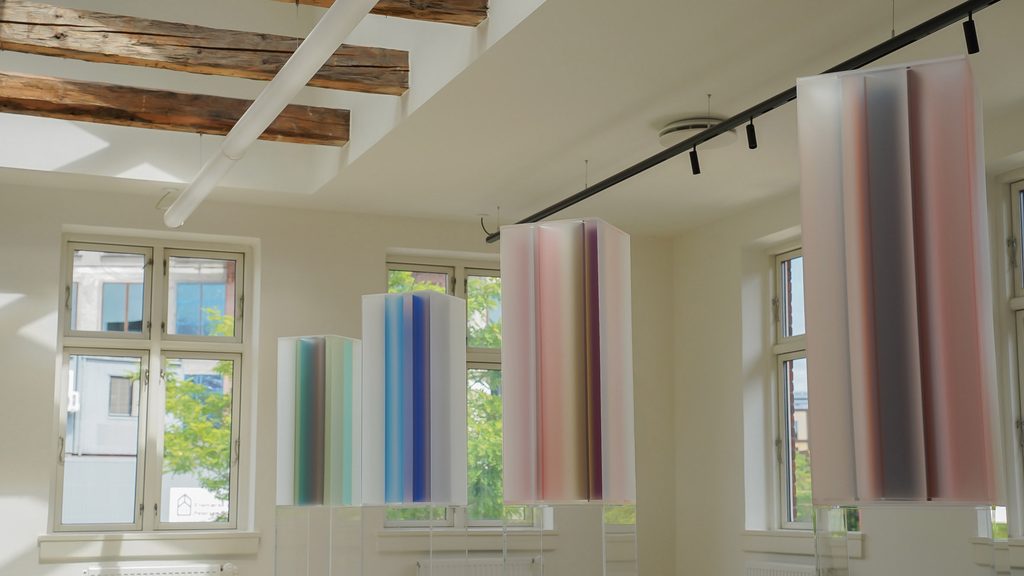
At Designmuseum Danmark, Lifestyle & Design Cluster invited to a panel talk titled Zero Waste – What is the future of Danish Furniture Design? about how zero waste can not only be a technical, but also a cultural stance on what is valued and preserved. Together with design brands, Linda Nhu Laursen, Head of Design Research at AAU Design Lab, drives design experiments to build new knowledge. In a new world, with a limited amount of resources, we all need to rethink how we design.
— If we look at the manufacturing industry, she says, it produces 1,1 million tons of waste. That’s before it leaves the factory. We have to look at that. And we’re only four per cent circular in Denmark, so we have to figure out how we actually use things again. In the furniture industry, 80% of wood is rejected. And it’s mostly aesthetic rejection. We make such high-quality furniture, so a lot of it can’t go in. It has cracks, it has knots, it has colour differences. Some of this 80% goes into wooden planks, and some goes into heating the factory, but we need to use more of the wood, and we need to figure out how and why we can do it.
— For all my time at Fritz Hansen, it has been about looking at the scrap, as we call it. I don’t like to call it waste. I like to call it scrap. Because this new name also gives you a new perspective on how you can utilise it. One thing is, of course, cost optimisation if you look at the operations perspective. But from my perspective with sustainability, it’s definitely a big focus on looking at how to utilise your materials, says Mikkel Huse, Sustainability Manager.
— In my head, it relates to sorting, so it’s more consumer-driven, saysJens Nørgaard, Product Manager, Bolia. Nobody really wants to buy that product with the big knot just in your eyes. And that’s a big part of the issue.
— I think we have some education to do, all of us, also with the end consumer, says Julie Lykke Myhrvold, Head of Design, Muuto. I think we have really high expectations for the wood to be perfect. And it’s natural. It’s not perfect. Maybe perfection should be in the mistakes, or in the imperfections, as well. At Muuto, we evaluate all the time how to source the wood. If we should think of quality a little bit differently: not only use A quality, but maybe also use the B and the C.
One of the mentioned experiments, initiated by Linda Nhu Larsen and partners, is a zero-waste experiment, where several brands were connected to manufacturers.
— Since all of them gave the consumer the blame, we pushed for the entire Danish branch: ‘You guys are the leading players, and I think together, we can push the consumers.’ That is our main purpose: to figure out how we can find a way where we can push consumers and use more of what is usually wasted. Be it offcuts or rejects, all of these things that we consider aren’t good enough to go into furniture, she says, continuing,
— Most end consumers want us to think about the planet and care for the materials. We are exploring how to actually show that aesthetically. Sustainability isn’t just a number. It’s also a cultural stance, and it’s also a production stance. That’s like Danish design heritage. How do we make those three go together again?
At the independent show platform other circle, Bali-based Potato Head showcased a design process going full circle in its line Wasted Collective.
— We are basically a hospitality brand and started as a beach club, restaurant, and hotels, says Ervina Akili, Design Manager. We also have a design, art, and music centre there. It’s like a creative village, highlighting Balinese culture.
— Now, we are also focusing on the Wasted Collective product, after recycling our own waste from the hotel. We have a lot of waste, in Bali in general and also from the hotel, and we try to make the most products out of it. We use plastic, glass bottles, ceramics, and textiles from used bed linens. Usually, in the hotel, we change them every three months, and now, we’re using the textiles again. We also use natural dye. In Bali, people usually have a lot of ceremonies, so we take their marigold flower waste and recycle it into colours.
On display at other circle was Zero One, created by the renowned designer Max Lamb, who’s collaborated with Potato Head for a long time, designing the products in the hotel room. Now, the focus is on attracting retail clients.
— Our work is comprehensive. We mix the hotel’s waste with waste from Bali in general. We have a waste facility where we collaborate with other hotels and beach clubs so they can put their waste there together and organise it. We also arrange a special Waste tour on a daily basis, inviting hotel guests to see the process of us taking care of our waste material and trying to separate and make the most out of it.
It’s great that you can collaborate and create your local ecosystem together with other industry players.
— Yes. We’re also working with local artisan vendors. Several of the pieces shown here come from them, including traditional Balinese knives that have been around for generations.
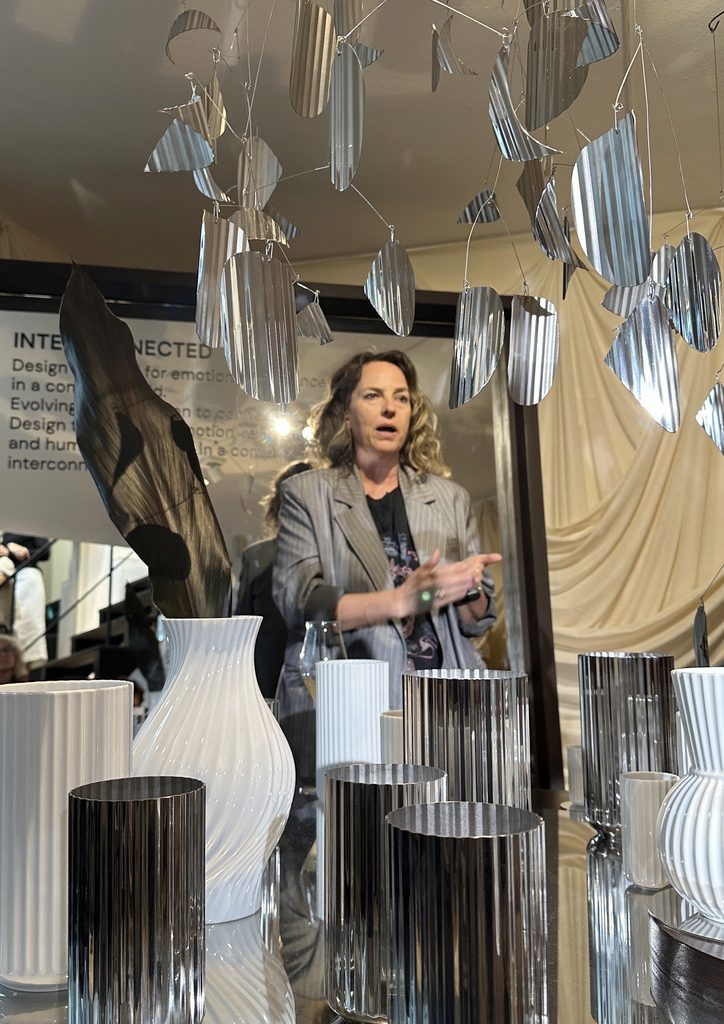
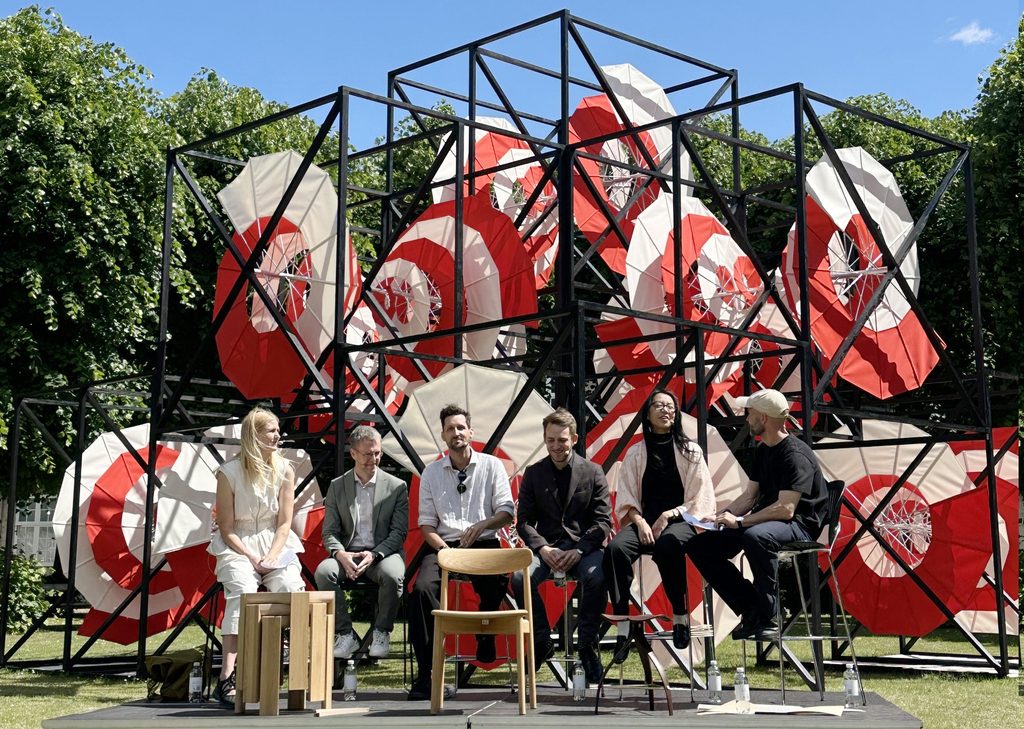
For 3daysofdesign, Rosendahl Design Group invited futurist Anne Skare Nielsen for a special talk on how to engage with design through carefully composed moments. Here’s an excerpt of her presentation, translated from Danish to English:
— On this mirror, it says: ‘Interconnected design as a tool for emotional resonance in a complex world. Evolving from function to connection: design that shapes emotion, relationships, and human experience in a complex interconnected world.’
— Sounds pretty good, doesn’t it? Though it depends on the perspective from which we look at it. Let’s start at the end: this idea of an interconnected world. Some people find that a little frightening, don’t they? Being interconnected with nation-states and people we may not particularly like. And if we go down that road, it’s often the same road where people don’t really like other people very much and would rather be rid of them.
— Then the world out there looks as though it’s falling apart. The world is broken. Isn’t that what we’re told? Shouldn’t we just give up? When we watch the news, it’s disaster after disaster: wars, abuse, sustainability crises, climate collapse. The latest thing is the apocalypse itself—the ocean currents are shifting, and apparently a new ice age is just around the corner. And last week I heard about the latest catastrophe: Danish children aren’t eating their packed lunches. Politicians disagree yet again.
— But isn’t it true? Many of us feel we’ve had enough of the world. How many of you have stopped watching the news? Even those of you who work with it—you still have to, of course. Maybe you’ve noticed that when the news comes on, and you have children around, you switch channels because you don’t want them exposed to it. Let’s put a pin in that for a moment. We’ve heard it all before.
— Because as a futurist—someone who has been doing this for 26 years and gives around 125 talks a year—I can tell you that it simply isn’t true. The world is not falling apart. The world is being built. The world is always under construction. And the only reason the world gets a little bit better all the time is that we are interconnected. Maybe we’ve forgotten that, or maybe we find it uncomfortable, but it’s a fundamental condition of being alive: we are deeply connected to one another.
— If we go down that path, then we’re also in a place where we actually like people. People are okay, aren’t they? Even though they make messes, burp, have sick children, get stressed, and struggle. The idea that we should move toward a future where people don’t interact with the world—that we’d rather do without them—is strange. And if we accept that people are allowed to interact, then we also need to accept a basic premise: we are here for one another.
— There are two things that are really important when we think about the future.
— The first is that we don’t have to understand anything at all. Is that okay? I actually think that’s one of the great gifts of your world. I don’t have to understand it to participate. I can bring other forms of intelligence—or even non-intelligence. I can experience a universe in another way. We spend so much time trying to figure things out, trying to understand them. But we don’t have to. Isn’t that wonderful?
— You don’t need to understand artificial intelligence to use it. You don’t need to understand other people in order to like them. The next time you argue with someone you love, and they shout, ‘You don’t understand me!’ you can simply smile and say, ‘Do you even understand yourself?’
— The second thing is this: if we agree that we don’t have to understand everything, then we must practice imagining things. When someone says, ‘Can you imagine a future where everyone earns twice as much and works half as much?’ Of course you can. Can you imagine your children still living at home when they turn thirty? You say no—but of course you can imagine it. That’s exactly why you’re saying no.
— Human imagination is one of the greatest things we possess. The real question is not whether we can imagine something. The question is whether we can see ourselves in it. And that’s a huge responsibility today: creating futures that people can see themselves in. That’s where design becomes a tool.
— Design is a time machine. It reaches back into the past—as this vase in front of me does—taking something that was fashionable in our grandmother’s day, then disappeared, and giving it a new function, a new connection, a new expression.
— That’s what humans do. We have these crazy visions, and someone else says, ‘I see what you see. I want that too.’ Then it becomes a huge hassle—and eventually it exists. That process is the fun part.
— The best trick for finding more peace in the world is to enter what I call ‘tourist mode.’ Think about planning a holiday. Don’t you immediately start imagining how wonderful it could be? Thailand. Baby sea turtles. Beaches. Or maybe Norway and a nudist camp. Or a caravan trip just south of the border. Or running naked across an ice sheet holding liver pâté in one hand and a beer strapped to your back. That ability to imagine possibilities is completely natural to us. Yet when we talk about work, education, ageing, geopolitics, or artificial intelligence, suddenly it’s: ‘The world is falling apart. Everything is dying.’
— The difference is that you can’t see yourself in those futures. Five minutes later you’re planning your vacation and happily saying: ‘I’ll use GPS.’ That’s artificial intelligence. ‘I’ll check the weather forecast.’ Also artificial intelligence. Because you can see yourself in it. So when someone asks, ‘Can you imagine…?’ just try saying yes. Can you imagine that the world is not falling apart, but being built? Can you imagine that what’s happening here is among the most important things in the world?
— Because this is what humans have always done. We know we are interconnected. We know we can’t separate objects from experiences.
— Have you ever sat in Greece drinking ouzo and thought, ‘Wow, this tastes incredible?’ Then you bring three bottles home, and suddenly it doesn’t taste nearly as good. That’s because humans are the ones who put meaning into things. When I buy something like this, in this exhibition, I’m not just buying an object. I’m buying a story, a hope, a longing, an image of what life might become. And perhaps that’s the deepest point: Maybe what is dying around us right now isn’t the world. Maybe it’s an old idea—that life is about owning, controlling, accumulating, and grabbing. A world built on ‘survival of the greediest.’
— Could you imagine that? And could you imagine that what replaces it is something that has been here all along? “Survival of the friendliest.” We aren’t called Human Evil. We are called Humankind. And there is something beautiful about the human longing for love, community, belonging, and connection. It is as old as humanity itself. We are remarkably good at placing our love, loyalty, and solidarity into objects. Sometimes we place it in the wrong things—our jobs, our brands, our institutions. We think our loyalty will be rewarded. Then one day we discover it wasn’t. And much of what we are waking up to now is the realisation that many of those places never loved us back. That’s why so many people feel disappointed. Sad. Betrayed. The greedy model is dying. And we are in the awkward in-between phase, asking: ‘Who can I love? Where can I find meaning?’
— And if you’re in any doubt, do you remember the striped vase? Do you remember it? Our people went absolutely ape-shit bananas over a striped vase. But really, it became this kind of spiritual campfire—a thing I could gather around with other people who were just as crazy as I was. This whole idea of: ‘We have to have it!’ But in reality, it’s us who bring the kindness, the magic, and the loyalty to these things.
— So from a future perspective, design really has two incredibly important jobs. There are probably lots of others, of course. But if I had to put it in the simplest terms as a futurist, there are two.
— The first is creating a safe zone. Imagine coming home—whatever ‘home’ means to you—and feeling completely safe. No guilt. No insecurity. You genuinely have everything you need. And part of what good design does is say: you’re allowed to have beautiful things. You’re allowed to own things you don’t actually need.
— How many of you have things you don’t need? What modern consumers do is this: because we feel guilty about buying something that’s purely aesthetic or fulfils an emotional need, we invent practical excuses for buying it. For example, you buy a new pair of trousers because you’ve just bought a new pair of shoes—and suddenly none of your old trousers matches the shoes.
— We’re constantly doing that. When actually, we could simply tell people: ‘If you think it’s beautiful, then it’s beautiful.’ If it gives you a feeling that something meaningful has happened, and it creates a conversation between us, that’s enough. That’s the need that’s being fulfilled.
— You’re allowed to live somewhere that’s aesthetically beautiful, thoughtfully designed, functional, comfortable, and filled with things that matter to you. But the second thing—and I think this is equally important—is that your baseline state is your greatest defence.
— If we’re all freedom fighters in the next great revolution—a revolution about reconnecting with the planet, enjoying being alive, and being kind to one another—then our own mood and energy are actually the most important battleground. Because when you’re well, happy, safe, and have emotional surplus, you’re far more likely to give that to other people. So becoming a person with surplus—with energy, generosity, and wellbeing—is the first great design task.
— The second task is what design uniquely enables. It‘s this ability to reach into the future and grab hold of something. You have an idea. You materialise it. Then we can gather around it together in our interconnectedness. Or perhaps you see a solution to a problem. Or a possibility that didn’t exist before. We can imagine something out there, bring it into the present, and make it real. In the past, that was something reserved for artists or creative people.
— But what if all of us can do it? Think of all the solutions we could create.
— And one last thing I’d like to tell you: Perhaps we don’t even have a choice. Perhaps interconnectedness—this idea that we’re connected—isn’t something we choose. Perhaps it’s simply what we are, even when we forget.
— Imagine Manhattan at dusk. The evening is falling, and suddenly every light goes out. Everything is dark. Except for one building. One building stands illuminated, glowing gold against the darkness.
— This actually happened during Hurricane Sandy, when the power failed across Manhattan. There was one building still shining. That building belonged to Goldman Sachs. They had anticipated the possibility of a blackout and installed a generator in the basement.
— Now, if we were still playing the old game—the game of ‘survival of the greediest’—the game where whoever has the most wins, where people can laugh and say, ‘Ha! We have light, and you don’t,’ then we’d say: ‘Brilliant. Well done.’ But the point was: it didn’t help them. The buses weren’t running. The trains weren’t running. The Stock Exchange was down. What use was their electricity?
— Maybe that’s the lesson. Maybe we’re already interconnected in this new world, and we’ve simply forgotten. That’s why it’s called ‘remember.’ I love that word. Because ‘remember’ literally means ‘re-member’—to become members again. We are members of the human experience. Sometimes we just need someone to remind us that an object isn’t merely an object. A thing is also a way of connecting. And you are connected. That’s also why we’re so afraid. Because if we try to play ‘survival of the greediest’ in an interconnected world, then all of us know, deep down, that we‘re the ones who lose. But if we play ‘survival of the friendliest’ instead, then interconnectedness becomes the greatest thing in the world.
— And isn’t it wonderful that we’re already there? Isn’t that beautiful? So take another breath. And remember: You’ve already passed. You’ve already arrived. When we choose kindness, we’re exactly where we’re supposed to be. We’re called human beings. Not human doings. Doing things—you can do that perfectly well. When we slip back into that busy, greedy mode, everything starts racing forward again.
— But the most wonderful thing in the world is simply coming home. Coming home to ourselves. And coming home to one another. And then: making room for those who need a little hug. The future does belong not to the greediest. But to the friendliest.