

“Only 20 per cent stays within Europe,” said George Kitras, marketing and communications manager at the Greek spinner Nafpaktos Textile Industry. “The rest, 80 per cent, is exported to Egypt, Turkey and Asia.”
From there, European cotton is spun, woven and often blended with fibre from other origins. When it comes back to Europe as fabric or finished garments, it is rarely labelled as European.
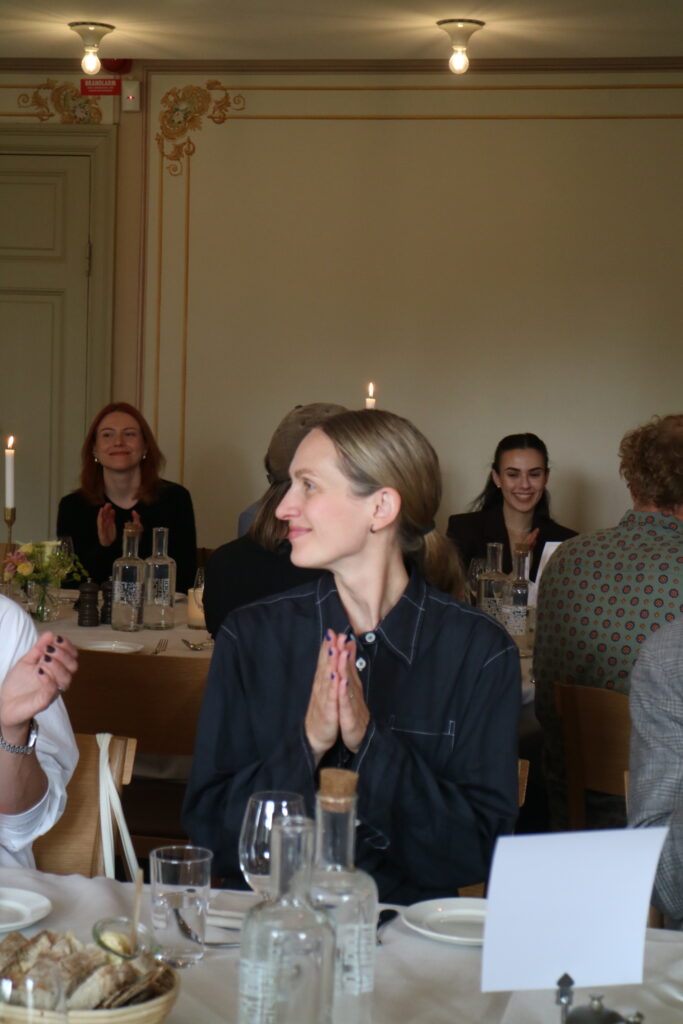
Among the Greek delegation at the table was a cotton farmer who does not speak English. When he was pointed out, the room gave him a round of applause.
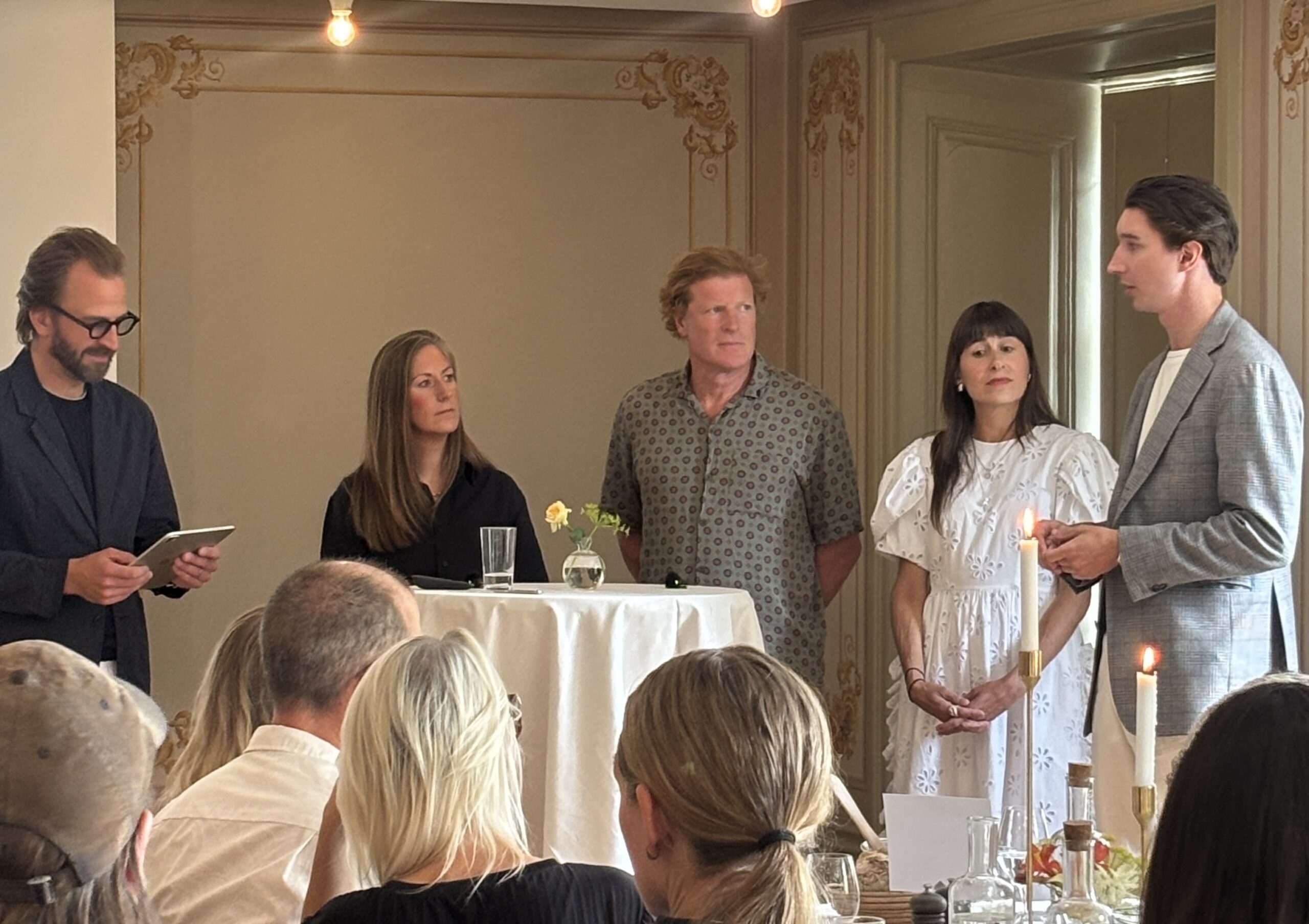
The room
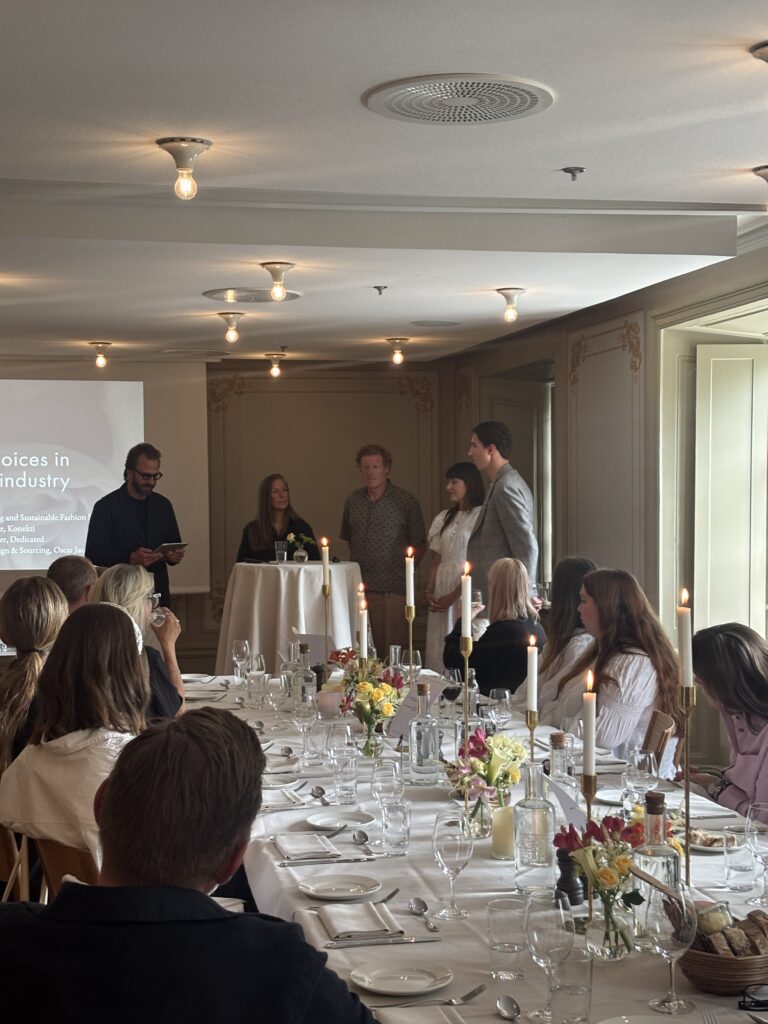
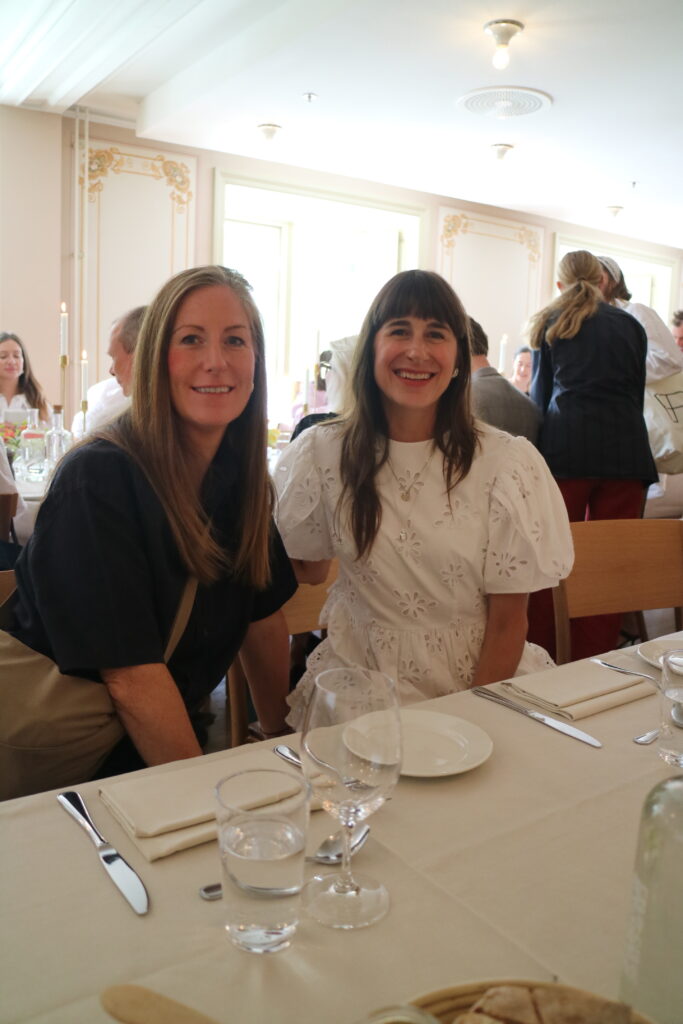
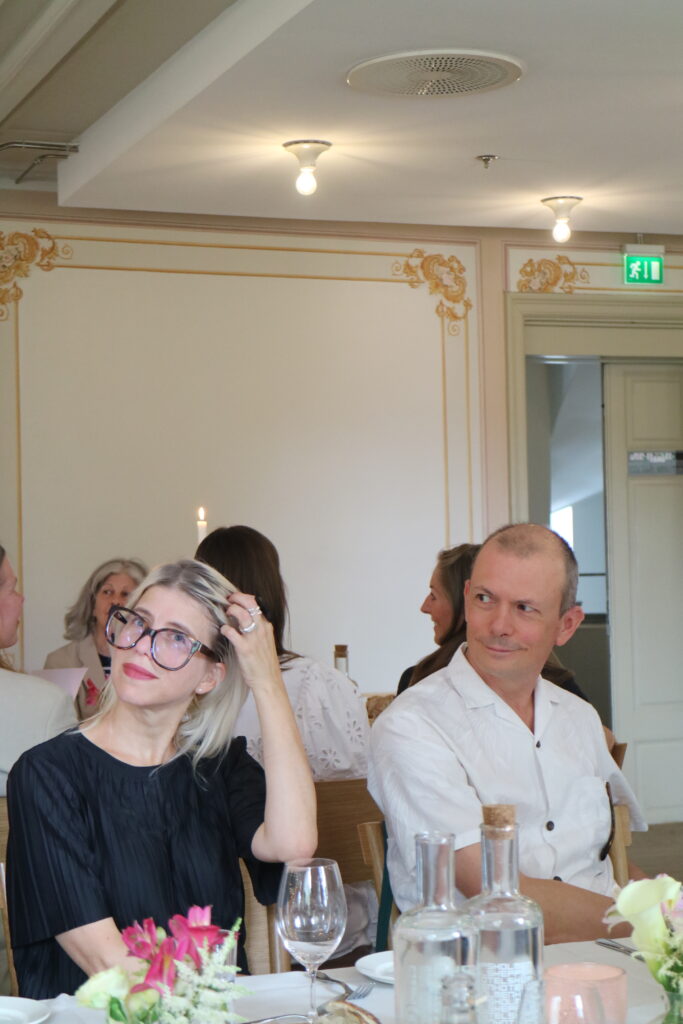
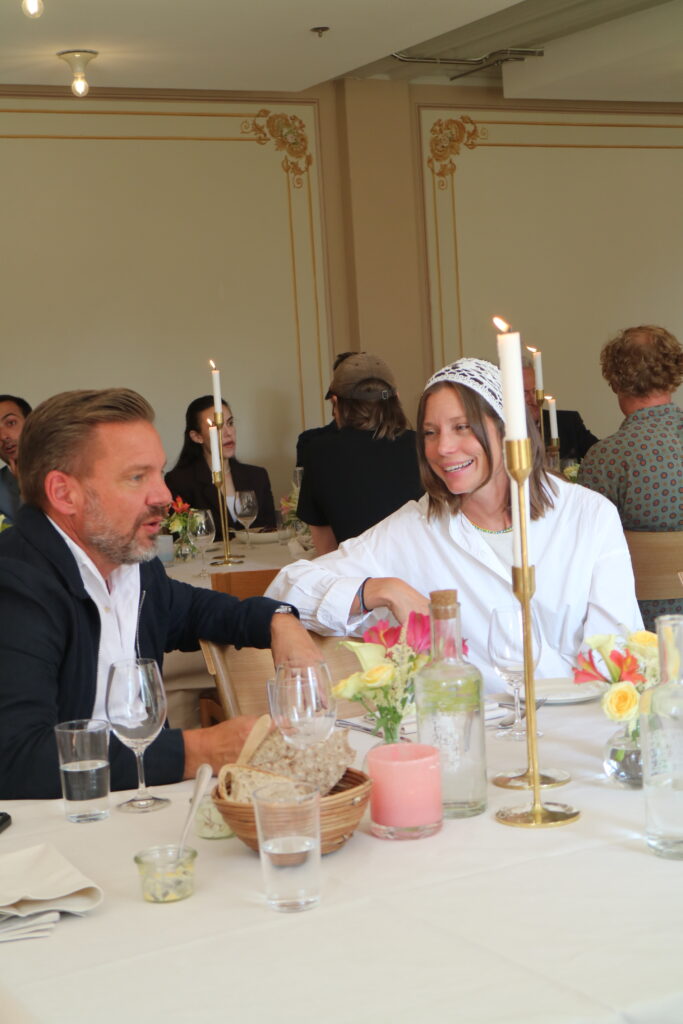
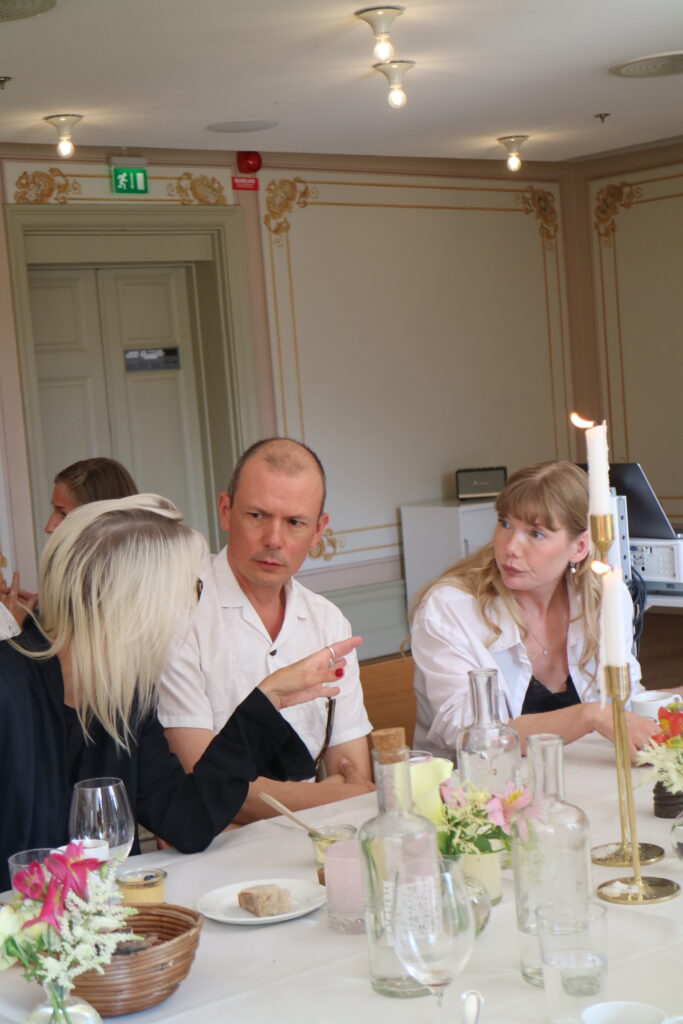
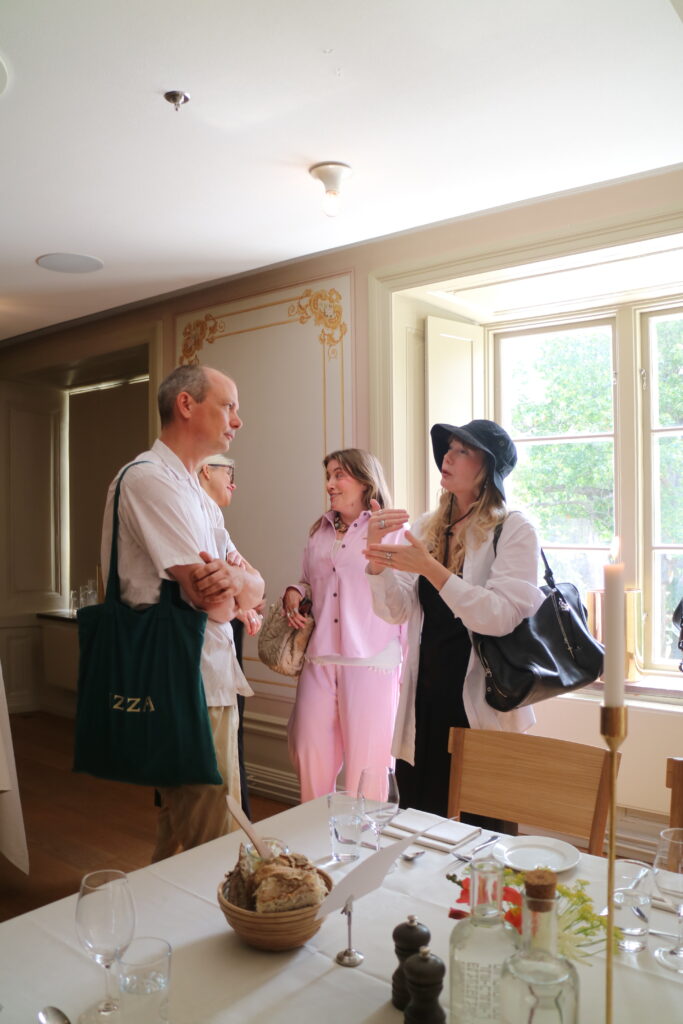
The lunch closed a summer of EUCOTTON events at Hotel Skeppsholmen, following three roundtable dinners with Nordic brands. Guests included Emily Dahl, fashion journalist at Aftonbladet Kultur and the voice behind Modemassakern; Elsa Westerstad, culture editor at Svenska Dagbladet; Karin Grundberg Wolodarski of Dagens industri; Sandra Myhrberg, editor-in-chief of Odalisque, with fashion editor Ulrika Lindqvist and features editor Natalia Muntean; and Jenny Fredriksson, fashion director at Femina.
From the industry side came Jennie Rosén, CEO of the Swedish Fashion Council, Philip Warkander of the University of Borås, Martin Hallander of Arkivet and Undine Markus of the Association of Swedish Fashion Brands. Pelagia Sousiopoulou, first counsellor for economic and commercial affairs at the Embassy of Greece in Stockholm, attended with a colleague.
The case for European cotton
EUCOTTON brings together cotton growers, ginners, spinners and weavers from Greece and Spain. The Nordic programme, now in its second season, runs events in Denmark, Finland and Sweden.
Konstantinos Dimitriou, general manager and managing director of the Greek cotton brokerage Vamvaki Ltd, described a fibre that sells without difficulty but without an identity. “We are selling it as a commodity,” he said. “Right now, we are just a premium cotton within that commodities trade system. We sell it to whomever is the highest bidder.”
His biggest surprise, he said, is how few people know the crop exists. “Even brands and sector-specific professionals don’t know that we have European cotton produced in Europe.”
European cotton is grown from GMO-free seed developed for European conditions. According to Dimitriou, that seed is less resistant to pests and gives lower yields, while EU rules limit which pesticides and fertilisers farmers can use. Kitras added water management and labour to the list. “Here in Europe, everything is checked, controlled, audited and safeguarded,” he said.
Every ginner, spinner and weaver in the EUCOTTON system is registered and audited, and fibre can be traced back through each stage to the farm and the practices used there. For Kitras, the argument reaches beyond cotton. “Self-sufficiency is something very important for the years to come,” he said. “So why not rebuild the textile industry within Europe?”
The panel
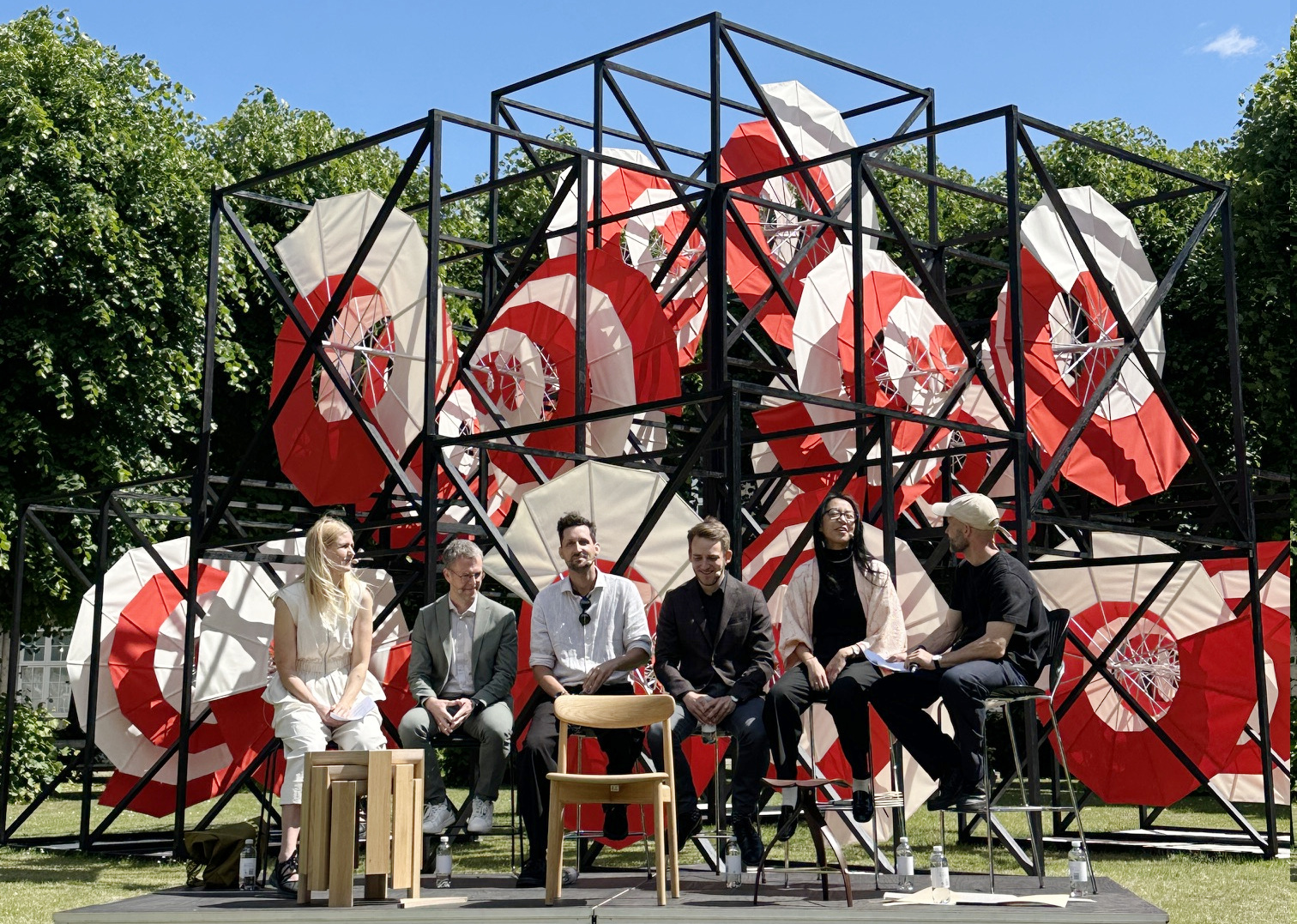
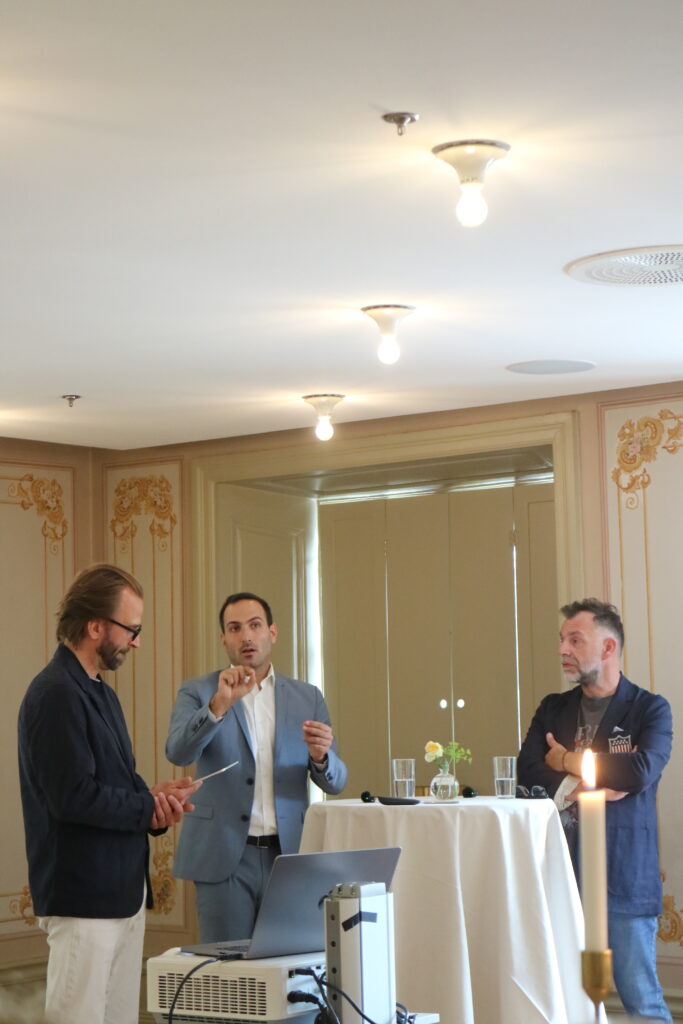
The second half of the programme was a panel moderated by Konrad Olsson, founder and editor-in-chief of Scandinavian MIND, on how sourcing works in practice.
Jodi Everding, sustainability consultant and former head of sustainability at Filippa K, called herself “such a materials nerd” and argued that fibre is where a brand’s footprint is decided. “The majority of a brand’s impacts come from their material choices,” she said. Even moving a familiar fibre to a new source is hard, she added, because the value chain is so established. Her advice was to push the questions down the chain. “Really work with your tier ones, with your mills, and ask them the questions, too. What’s behind the certifications?” The obstacle she returned to was price. “It comes down to the pricing and the affordability, and you’re trying to compete with big polyester, and that’s pretty tough to do.”
Noah Areblad works across product development, design and sourcing at Oscar Jacobson, whose parent company acquired Filippa K in 2025. He explained that brands buy fabric from mills, not fibre from farms. “You, as a customer that purchases fabrics, are very far away from farms.” Oscar Jacobson’s customers ask about longevity, not origin. “They’re not asking a lot of questions regarding traceability,” he said. “Which means that we need to figure out who are the stakeholders here.” His wish for the next two years was simple: “I would like the industry to aim for more standardised certifications.”
Lydia Brearley, founder of ENKEL Consulting and Sustainable Fashion School, spent about 20 years as a buyer, including at C&A. “To get to that granular level of where your cotton is from is really, really difficult and almost impossible in some instances,” she said. On labels, she and Johan Graffner disagreed on the count but not the conclusion. “I have a figure of about 250, but whether it’s 200 or 400, it’s a lot. And it’s lost meaning.” Legislation will change the terms, in her view. “Sustainability doesn’t really sell, but a lot of the things that we’re talking about are going to become mandatory.”
Graffner, founder and CEO of Dedicated, has spent two decades building a business around responsible materials. “If there’s one crop on this planet that we should dig into how we could improve the farming practices, it is cotton,” he said. In conventional farming, he said, depleted soil needs ever more synthetic fertiliser to give a yield. “You need to grow chemical-free with a living soil, or you grow chemically with a dead soil.” He noted that the eco-fashion stores that once operated in Norway, Denmark and Sweden have all closed, and that a Danish organic carrot farmer he met now plays down the word organic because customers will not pay extra. His conclusion was that the change must come from legislators. “It has to come from the grown-ups, our elected politicians. We need grown-ups in rooms to set the rules and then we can play all nicely together.”
Funded by the European Union. Views and opinions expressed are however those of the author(s) only and do not necessarily reflect those of the European Union or the European Research Executive Agency (REA). Neither the European Union nor the granting authority can be held responsible for them.