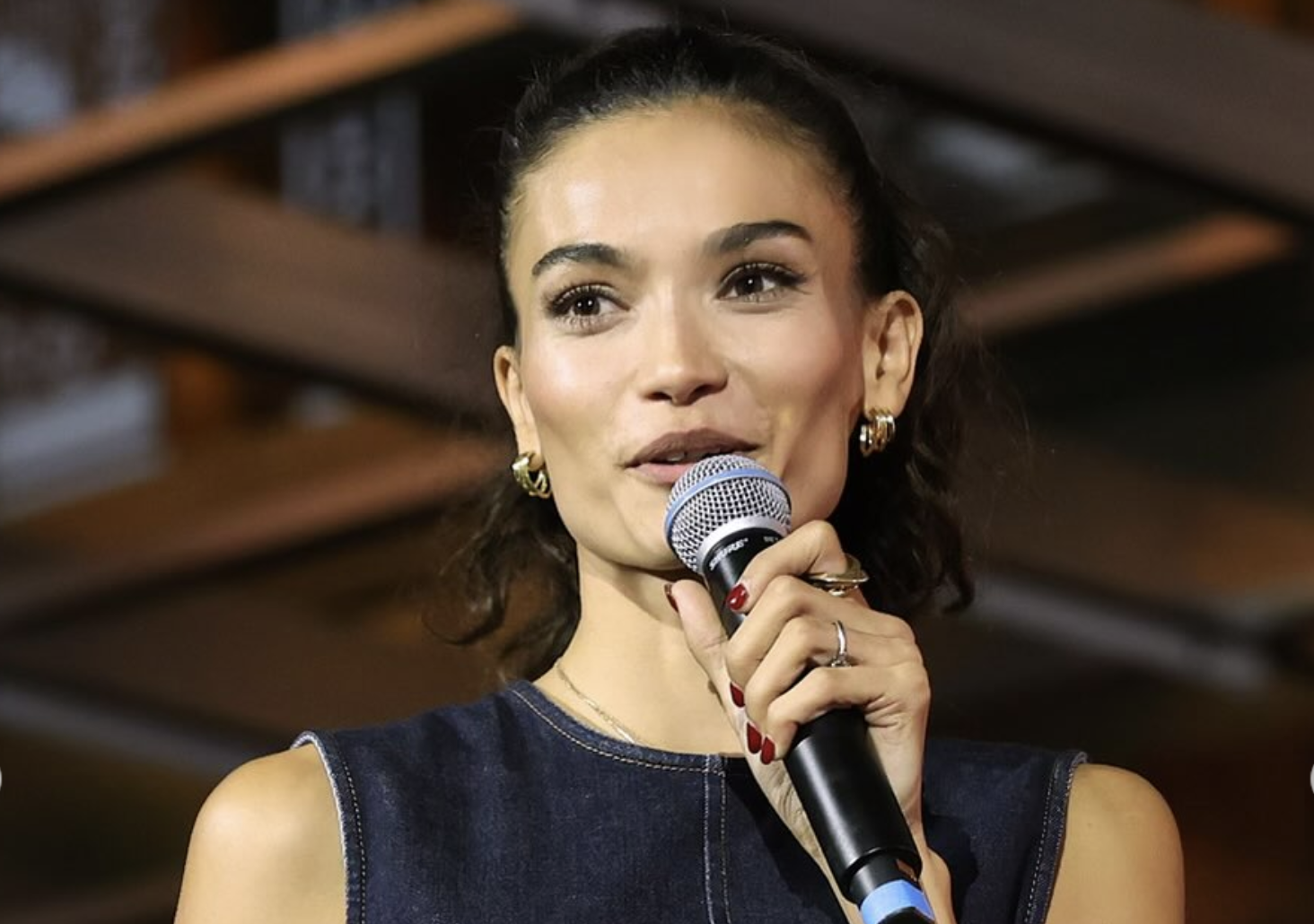
Born in 2023 with nine fragrances, launched at Liberty in London, things have moved fast for Swedish Paris-based perfumerie BIBBI.
— We already have Liberty and Selfridges, and this month, we’re launching with Harrods, which is huge, says founder Stina Seger. We’ve also launched with Space NK. Their 25 doors in the UK give us a regional reach to the people outside of, but also inside of, London. The Londoners are not necessarily going to Harrods and Selfridges, but to their own neighbourhood Space NK, so it’s also a great reach. We’re also launching in Australia with MECCA in July, with around 25 doors, which is also a huge, exciting step, stepping out of Europe.
— Harrods are also so supportive; they want to create products and make exhibitions with us. They’re excited over the brand as well, with our Scandinavian-French heritage, tapping more into fashion and art than a traditional fragrance brand, and that the scents are different from others.
However, everyone is, of course, saying their fragrances are different. And it’s such a saturated market. What’s the secret for you?
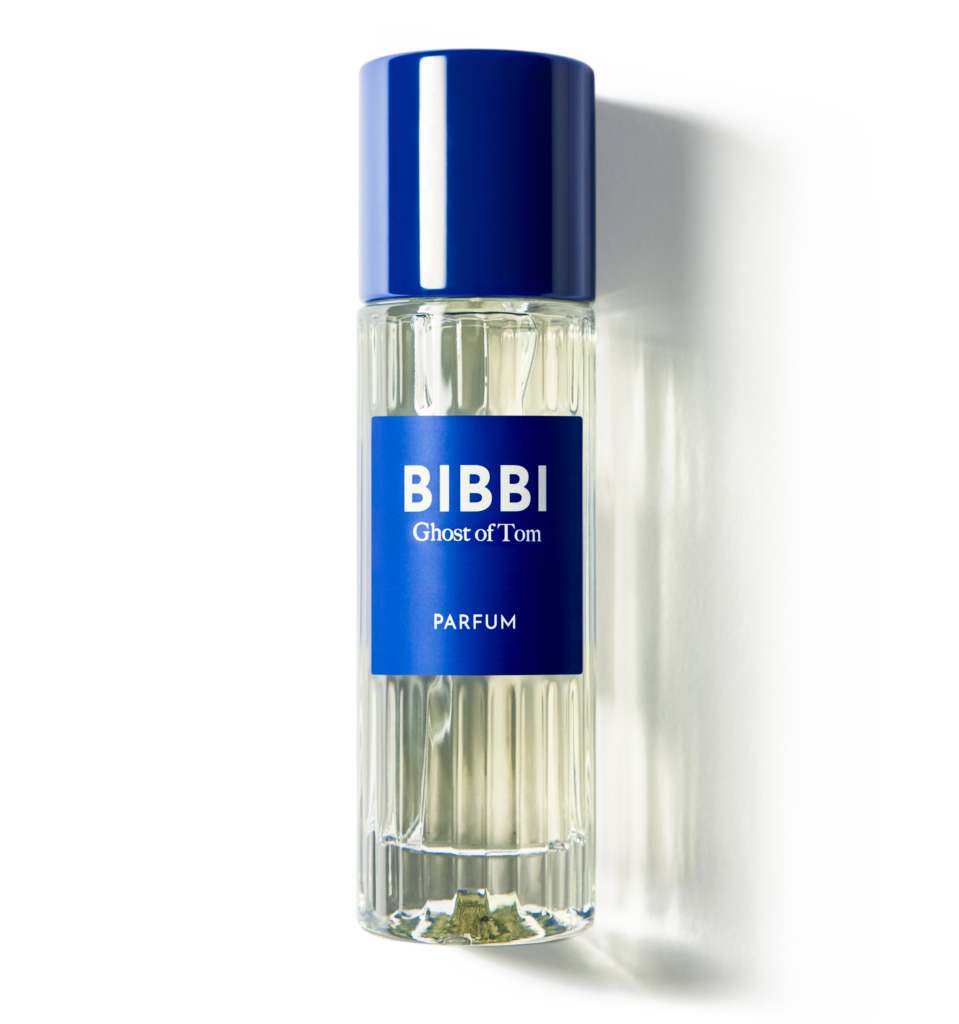
— I’m not from a traditional perfume family, Seger continues. I didn’t think about the fact that I needed to have an oud, or patchouli — I just did what I liked together with the perfumer. It’s not like typical one-ingredient fragrances. They really live, develop, and change, and they’re more contemporary. That said, I think a lot of brands have extraordinary fragrances. And I do get really, really proud when I see Scandinavian brands at Liberty and Selfridges. I’m not saying we have the best fragrances. I’m just saying that they are a bit different, and so is the visual aspect, with the blue colour, which I know will fly off the shelves.
So, your key to success is not to have a perfumer’s mindset but to take an outside perspective, and to also take a global approach when building a brand?
— I think the key to success is passion. David Bowie said that, ’Whenever you feel safe, you’re not doing it right.’ You need to feel like you’re almost reaching the bottom, but you’re not.
— You’re also a woman, Head of Marketing Carina Fabregat adds.
— I’m a woman, yes — thank you for reminding me, and that definitely has something to do with it. When it comes to places like Liberty, Selfridges, and Harrods, but also Space NK, all of the buyers and commercial directors are women. I think they also love to see a brand made by a woman, as well as understand quite well how the fragrances are made.
Do you have any female role models within the industry?
— I love Olivia Giacobetti, she’s a great perfumer. And I have a retailer, Galilu in Poland, where the owner, Agnieszka Łukasik, is incredible. She started Galilu 20 years ago, at a time when Poland just came out of the communist era, and she basically needed to teach the Polish people how to buy luxury. She’s also lifting up other women, which is quite rare, unfortunately.
The markets you’ve mentioned might not be the first ones that brands consider to expand to in the first place.
— I get that. In Europe, we’re in the Benelux, Poland, the Baltics, Scandinavia, the UK, France, Ukraine, and Serbia. Europe and North America are still the biggest markets when it comes to niche perfume, but for the expansion of the brand, Australia is very close to the UK, also when it comes to taste, making it a very natural next step for us.
— We’ve had the US as a next step, but now, it’s very uncertain with all of the tariffs. Will they come? Will they not come? If you decide to go there, you obviously need to invest a lot of money, and it needs to work. So, we’re also looking at the APAC — it’s the fastest growing market, still, and with so much potential — and at South America, which I think is very interesting.
What have been the biggest challenges when creating the brand?
— Production. We produce everything in France, which I’m proud of, but the first batch we did… We were going to launch the brand earlier than we did. We got the products, they looked beautiful, and we sent them out to our partners that we’d already signed with. And then we didn’t hear anything. We got a bit worried, started to reach out, and they said, ‘Yeah, we got the product, but the box was broken.’
— It was the same problem everywhere, for everyone. We asked ourselves how that could happen. We called the factory. They didn’t know. Luckily, we saved the mock-up. I opened up the package, and they (the factory) had changed the interior. When we asked about it, they said, ‘Oh yeah, we didn’t have that at home.’ So they tried to escape it. But then, they redid the whole thing, and we launched around one and a half months later. But that was tears!
And what have you learned throughout the journey?
— To stick to your core and listen to your instinct. We opened with two different distributors. I didn’t want to do that. We did, but it was not right. Then, we had to pull back, and to do that is also costly.
— Another thing: say no. It’s important to be able to say no. I said no to Selfridges two times before we actually said yes. You need to be able to give everything that you can to make it a successful launch — you don’t get a second chance. Especially with those players, it needs to work.
There’s so much competition, so you’re afraid to say no.
— You are, but you should.
And that might also be the difference between being a part of a team as an executive and running your own brand, being fully responsible for it.
— Yes. If I were with, say, LVMH, I would probably have said no to a lot of things that we have done. It’s very costly with, for instance, pop-ups and the production of them. Our investor asked, ’How much did it cost, did you say?’ I answered that you have to (create it) — it’s all about setting the brand, it’s all about the details. You have to be able to make those decisions, that is, if it doesn’t work, it’s going to be extremely costly. But if it does work, it’s a success. Just trust your instinct, because, at this stage, it’s also very much a startup.
Finally, the market has seen quite a great growth rate. What do you forecast for the next few years? Will it remain?
— Yes. I’m certain. The industry is really booming. We have great growth. We did triple digits from last year, both in sell-in and sell-out, and we’re going to continue that, because we’re still small.
– It may not be surprising when it comes to perfume, but the Gulf and Middle East region is the fastest-growing market right now and has the highest per-capita fragrance spend in the world. Western niche brands that crack that market, through the right local partners and cultural understanding, are seeing extreme revenue growth. It’s not easy to enter, but the upside is significant and a market that we have targeted for the end of 2026. Also, as I said, look at APAC, where we have a big and growing middle class in India, but also China and Thailand. So it is great growth, and it will definitely continue!
— All of the projections say that the growth is going to be at least 8%, up to 15%, growth every year, for at least 10 years. So, I’m not worried. What we have seen with the niche industry versus prestige is that the consumers now, Gen Z but also Millennials, are much more into personalised fragrances, much more into creating the trends than following them. They’re mature when it comes to scent. They also like to layer and play and create their own version of it.
– Consumers in general are moving away from mass market, prestige, and designer brands into niche perfume brands. They are also extremely loyal, and the customer lifetime is extraordinary compared to other industries. Once someone connects emotionally with a scent, repurchase rates are very high, and they tend to explore other products from the same brand. Acquiring the right first customer is worth a lot and key.
– The margins in niche perfume are exceptional, if you protect them, meaning it’s very easy and very tempting to over-distribute or discount. That, however, destroys that premium positioning very quickly and almost irreversibly. Exclusivity is the margin, Seger concludes.