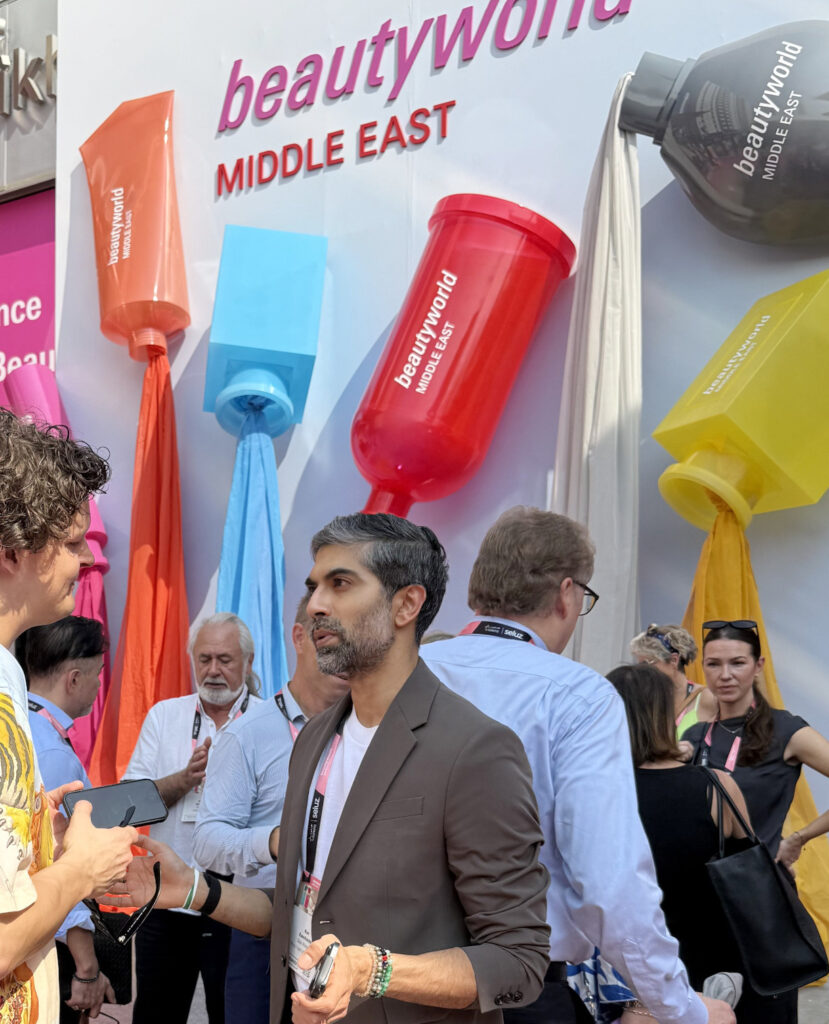
According to Ravi Rawadshadna, Show Manager, Beautyworld Middle East is becoming a superpower in the beauty industry. One of the biggest reasons: the people in the GCC markets, which includes United Arab Emirates and Saudi Arabia, are spending more money on beauty products compared to anywhere in the world.
— So, it looks like people here love beauty products, he says. Brands see that, and they want a piece of it. Once they’ve done their bits in Europe and the US, the next thing they want is to do the Middle East.
— The other day I was in Sephora. At 11:30 PM, on a Saturday, people should be sleeping. Sephora was packed. I asked them, ’What’s happening, is there a sale going on?’ She replied: ’This is every day.’
And yesterday, a Euromonitor executive took the stage, sharing their prediction of a doubled CAGR (Compound Annual Growth Rate) compared to global numbers.
– Yes, for the Middle East and African market, 47 billion USD is what we’re looking at in 2027. These markets all have a younger population, with more disposable income, which allows them to spend more money. Africa has a super young population. We are also very close to India, also with a young population of more than 1.5 billion. Crazy, right?
How could Nordic brands benefit from this?
— Nordic brands are often described as expensive. If your products are expensive, and you see people end up spending more money here, this should be a target market for you. In Saudi, the UAE, and the neighbouring countries, people have more disposable income to spend on an expensive product — if they believe that it’s good for them.
In another panel the other day, it was shared that ’a few years ago, Dubai was following the trends; now we lead them.’ Do you feel the same?
— Yes. Take perfumes, our biggest section here at the fair. Back in the day, everyone talked about how they were to be made in France. Today, we have Made in Dubai companies, perfumes, trending globally, and selling in New York, Europe, and South America. That just goes to show that we are not only bringing people in, but we are sending brands like Lataffa and Armafout to a global audience.
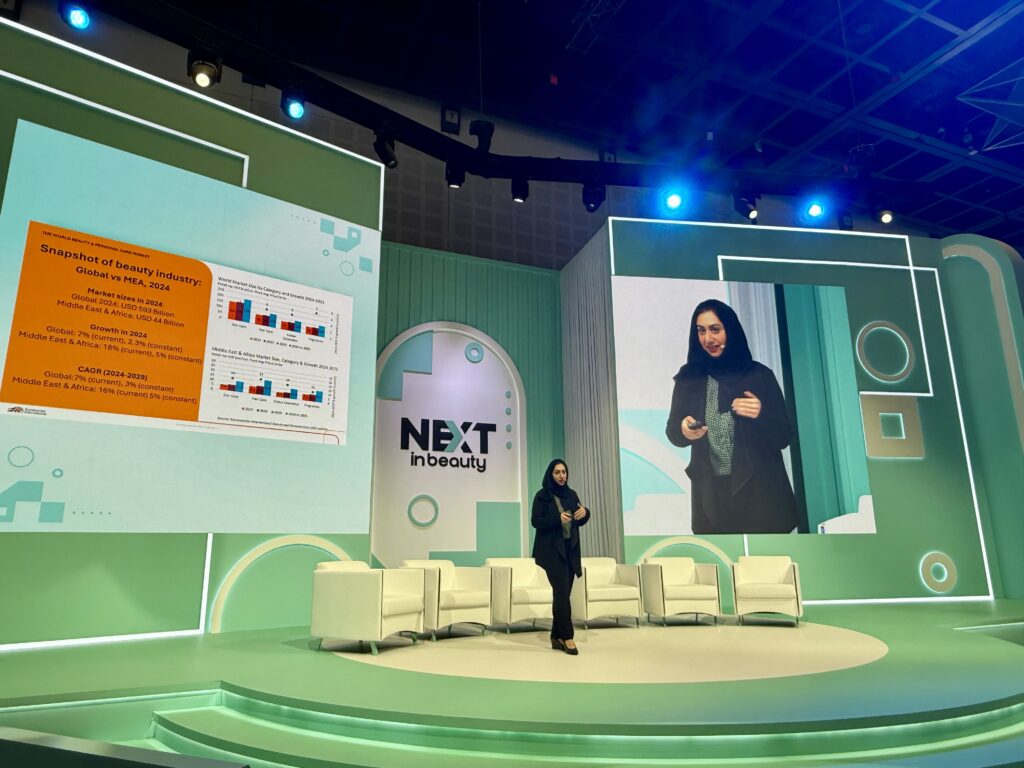
The mentioned executive from market research company Euromonitor International was Senior Analyst Amna Abbas. During Beautyworld ME, she delivered the opening remarks at The Next In Beauty conference.
— I spoke about the global significance of the Beauty & Personal Care industry and highlighted how the Middle East & Africa region continues to be one of its fastest-growing markets, she told us afterwards.
According to Euromonitor International, the global market size in 2024 is valued at USD 593 billion, with USD 44 billion attributed to the Middle East & Africa. This year, the market is projected to grow by 7% globally at current prices (2.3% at constant prices), and by 18% in the Middle East & Africa at current prices (5% at constant prices). Looking ahead to 2029, the industry is expected to grow at a compound annual growth rate (CAGR) of 7% globally at current prices (3% at constant prices), and 16% in the Middle East & Africa at current prices (5% at constant prices).
— Consumers are becoming increasingly value-conscious, seeking products that support long-term beauty and wellness — enabling them to age gracefully and healthily, Abbas continues. As a result, it is essential to explore the latest trends shaping both the global and Arab Beauty (A-beauty) markets, uncovering new opportunities for business growth.
Why is now the right time for a foreign brand, for instance from the Nordics, to enter the GCC/Middle East markets?
– The region offers significant opportunities for global players, including those from the Nordics. Consumers in the region are well-informed about international brands and concepts, and they actively seek high-quality, value-driven products that support and enhance their beauty across short-, mid-, and long-term goals — especially as trends like healthy longevity and healthspan planning gain momentum. Brands such as Foreo and IsaDora already enjoy strong market presence in the region, serving as great examples of successful Nordic entries into the Middle Eastern beauty landscape.
The beauty and personal care industry, she continues, is poised for significant growth, as consumers increasingly prioritise long-term beauty and wellness.
— The Middle East & Africa region is set to be a key driver of global expansion, with categories such as dermocosmetics, fragrances, and skincare gaining traction through trends like healthspan plans.
— Despite global economic uncertainties, countries in the Middle East & Africa are expected to lead growth, driven by strong consumer demand, robust government support, and technological advancements, including AI integration and high internet penetration, particularly in the GCC markets such as the UAE, Saudi Arabia, and Qatar. The region also benefits from a healthy mix of international, local, and regional brands, creating fertile ground for further business expansion.
— To succeed in this dynamic landscape, businesses must adopt multi-tiered pricing strategies, invest in bioscience-backed multifunctional products, and strengthen human and cultural connections through digital content and immersive storytelling that resonates with evolving consumer expectations.
Amna Abbas shares Euromonitor International’s five key Beauty & Personal Care trends to watch
1. Healthspan Plans
— Middle Eastern beauty consumers are increasingly drawn to brands that align with long-term health goals, choosing products that support overall longevity and well-being. There’s a growing emphasis on looking and feeling youthful for years to come. As part of the healthy ageing trend, consumers are seeking scientifically proven ingredients such as collagen, retinol, and vitamin C. A notable example is the rising popularity of K-Beauty brands like Beauty of Joseon, particularly its Revive Eye Serum: Ginseng + Retinal, which focuses on clear, youthful skin.
2. Clinical Confidence and Bioscience-Backed Products
Consumers are gravitating toward brands with clinical positioning and bioscience-based formulations. Examples include CeraVe’s Vitamin C Serum with Hyaluronic Acid, popular for dermocosmetic skincare, and Charlotte Tilbury’s Fragrance Collection of Emotions, both gaining traction in markets like the UAE and Saudi Arabia.
3. Recession Glam
This trend reflects a shift toward mindful spending, with consumers prioritising smart purchases that offer quality without compromising budgets. A standout example is SHEGLAM, a colour cosmetics brand launched by fast-fashion giant SHEIN, offering premium-feel products at affordable prices. It entered physical retail in Dubai through Landmark’s Centrepoint stores in 2023–2024.
4. Loyalty Immersion
Regional beauty brands are increasingly focused on deepening consumer engagement by encouraging users to spend more time on their apps and interact with immersive video content. This strategy fosters brand loyalty through continuous and meaningful interaction. Examples include UAE-based brands such as Kayali fragrances and Ahmed Al Maghrabi (a well-known Arabian fragrance brand), which are effectively connecting with Zillennials (Millennials and Gen Z) through platforms like TikTok and Instagram — creating strong brand relatability and emotional resonance with their audiences.
5. Eco-Evaluation
Sustainability is increasingly top-of-mind, with consumers seeking lightweight formats and transparent information on how their choices reduce waste. A regional example is The Camel Soap Factory in the UAE, which emphasises sustainable ingredients and packaging across its product range—from bar soaps to haircare.
Arbelle is a Swedish software company that has been on the market for more than 20 years, mostly with face tracking technology.
— A lot of beauty brands asked us if we could do something custom for them, and when we realised there’s a market for this, we developed our own products, says Ante Plavcic, Senior Sales Manager.
The range includes a Virtual makeup trial and Foundation shade trial.
— The makeup tool means that if you’re a brand, say L’Oréal, you can implement this on your website and put your lipstick, eyebrow, and foundation shades in it so that people can try on makeup virtually before actually buying it. On your mobile phone, you can see how it looks on your face, if you like it or not, and immediately buy it. We pride ourselves because we try to make it as realistic as we can so that it really matches what you get in real life, so that you won’t have to return it.
— We also have a foundation shade finder that analyses your skin tone and recommends the best shade for you. We are the first company in the world to use the so-called Monk Skin Tone Scale since last year. It was developed at Harvard and enables us to be really inclusive to cater to people with fair and dark skin, so that we can cover a long range of different shades, colours and ethnicities. We pride ourselves on that.
The macro trend with the use of AR and VR is huge. How do you aim to stand out from the competitors?
— Some of the similar companies try to over beautify people’s faces. We don’t do that. We try to make it as realistic as we can so that the customers can get what they really see and be more loyal to the brands. The brands have the satisfaction of satisfied customers, and in the end, it means higher conversion, which we’ve seen with several of our clients. And also up to 60% fewer returns because of our technology, so that you don’t have to restock your warehouse.
— We’ve had independent testing for one of our big clients, which said that our Foundation shade finder has 80+% accuracy according to their standards, compared to some of the biggest competitors that had 70%.
And the pricing structure, do you have to be a huge brand to be able to go for it?
— No. We also have a small concept store in Milan, only one store, and they only sell lipsticks and lip balms. You can also be a big brand. We work with one of them, the 6th biggest in the world in colour cosmetics, and the 2nd largest in the number of units sold.
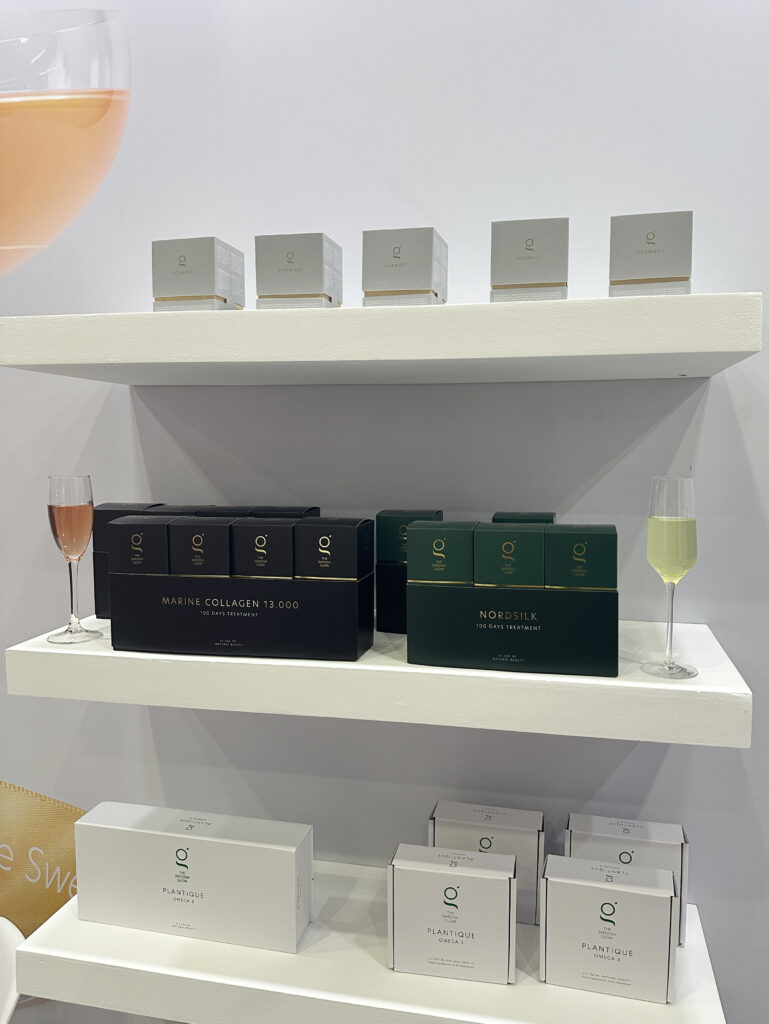
Among the predominant Beautyworld trends, collagen solutions obviously stood out. Swedish-Dutch premium supplements brand The Swedish Glow is specialised in liquid, high-performing formulas. Founder and Managing Partner, Drs. Elin Hellqvist, even states that her company ’started with the collagen hype.’
— We focus on hair, skin, now also hormones, and general health. ’The Swedish Glow’ is more a state of being than being from Sweden or producing in Sweden, although half of the production is made there. It stands for a lifestyle, from the inside out, living a healthy life, feeling good more than looking good.
— Everyone always says they’re high end, but we have 1% of the market that is our audience, so to say, and are a bit higher in price.
Tell us about the range.
— We’ve invented Nordsilk. It’s the Rolex for the hair! It’s a symphony of three ingredients, biotin, silicon, and Vitamin C, in liquid form, with very high bioavailability and is great for preventing hair loss but also stimulating keratin production from inside out, creating a more glowy hair.
— We also sell Plantique, where the Omega 3 is great for anti-inflammatory things. I can promote this to an end, and I would love Omega to be as sexy as collagen! It’s such a difficult product to make. We take it from an algae plantation in Bretagne, France. If you look at fish oil, the fish doesn’t produce any Omega, so they take it from the algae. We’re skipping the ’middlemen’ here, making it more sustainable. We mix it with MCT oil, which has much more benefits than olive oil, which is used by many lower end range products. It also contains Vitamin A, making it a liquid retinol from the inside out, Vitamin D and E, and K2 from soy, the most effective one. This makes it an improvement for general health, especially in inflammatory conditions, on cell level.
— Hérmade is a ritual for women during menopause. It’s about enlightening symptoms one might have — think heat waves, sleepless, restlessness, brain fog, libido — and using everything that one can experience as a natural way of easing them.
What’s next in supplements?
— When Generation Z is coming, they will look into more adaptogens and mushrooms, also affecting stress release. We’ll see more saffron, mocha, and more brain focus, sleeping, and general health. I think collagen will definitely die with our generation! Hellqvist states.
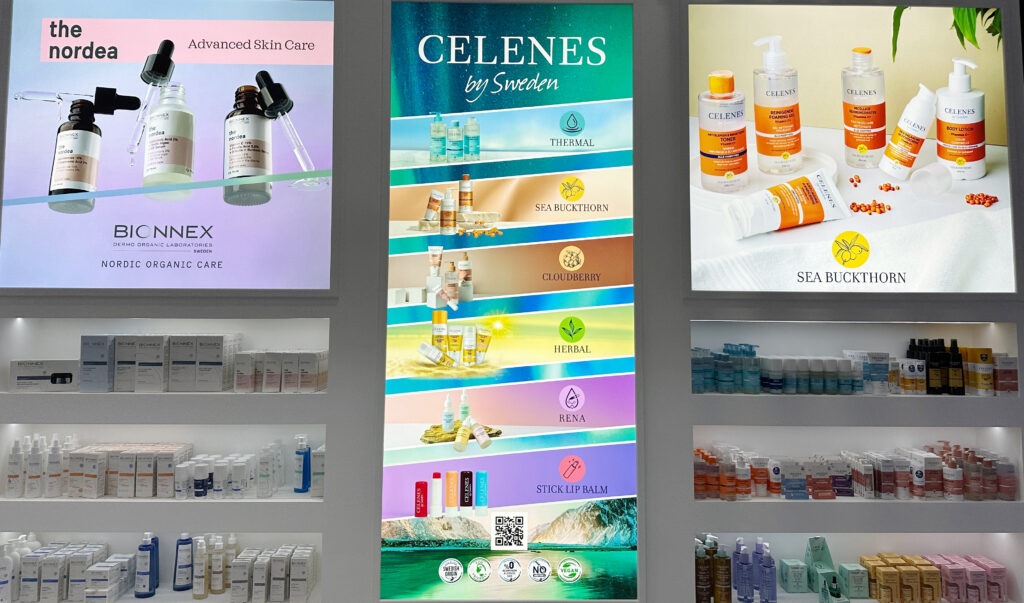
Swedish cosmetics company Carex focuses on clinically and dermatologically tested products, manufactured in a 4000 m2 closed space in Sweden, producing about three million units per month.
— We invest a lot, says Muhsin Önel, Managing Director. It’s a very good factory, and we are now exporting to more than 35 countries.
The company also runs skincare brand Bionnex.
— It’s mainly for pharmacies, supplying to the dermatology channel. In some countries, we are even working with dermatologists. It’s not so common in Sweden, but in the Middle East and Asia, you can go to doctors also for prescription.
In Eastern Europe, they have the ‘white coat effect’; as soon as it’s a pharmaceutical brand, it just goes off the shelf.
— Yes, it’s very, very big! Önel agrees. He continues:
— With our second brand Celenes, which is mainly skincare, we supply directly to supermarkets and the ‘mass’ market, competing with Nivea and Lumene. Lumene is a wonderful competitor in Europe and have a good turnover in Nordic countries, although not so big in the Middle East and Asia.
— We are also competing with Neutrogena, Garnier, and L’Oreal. They are number 3, and we are number 4. We are also very strong in the Middle East, working with very good partners, especially in Qatar.
And how do you want to define your two brands?
— It’s one derma brand and one mass brand, working with different channels, different themes, different prices. It’s just like Beiersdorf. They have a Nivea, but also Eucerin, which is mainly for pharmacy, while Nivea is a mass brand. The two concepts are totally different.
— Compared to them, we want to stand out by keeping it vegan, natural, clean, and minimalistic. These are the USPs of the brands. In terms of price, we call it ‘high quality and affordable.’ And, we promote very much that it’s Swedish! Önel shares.