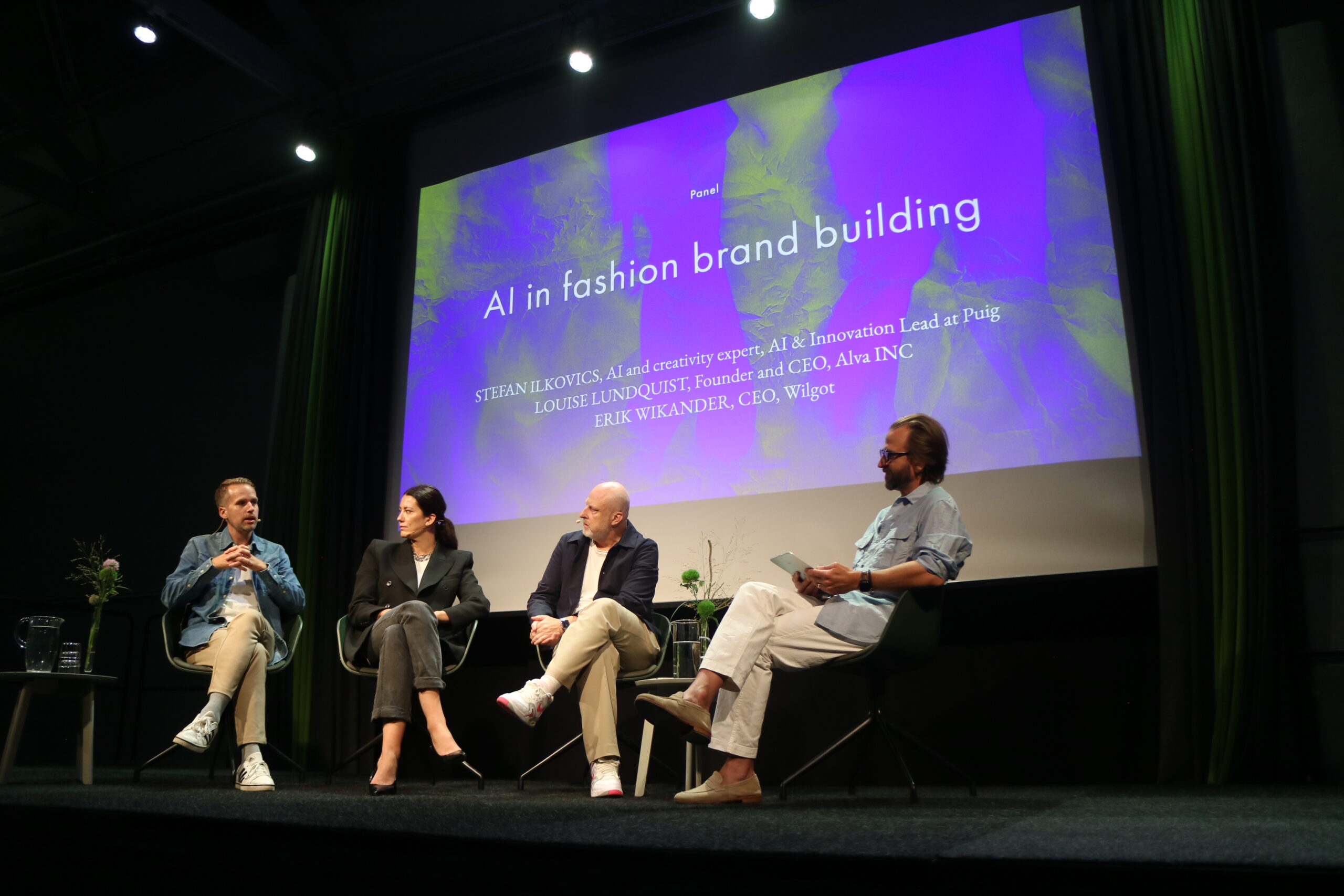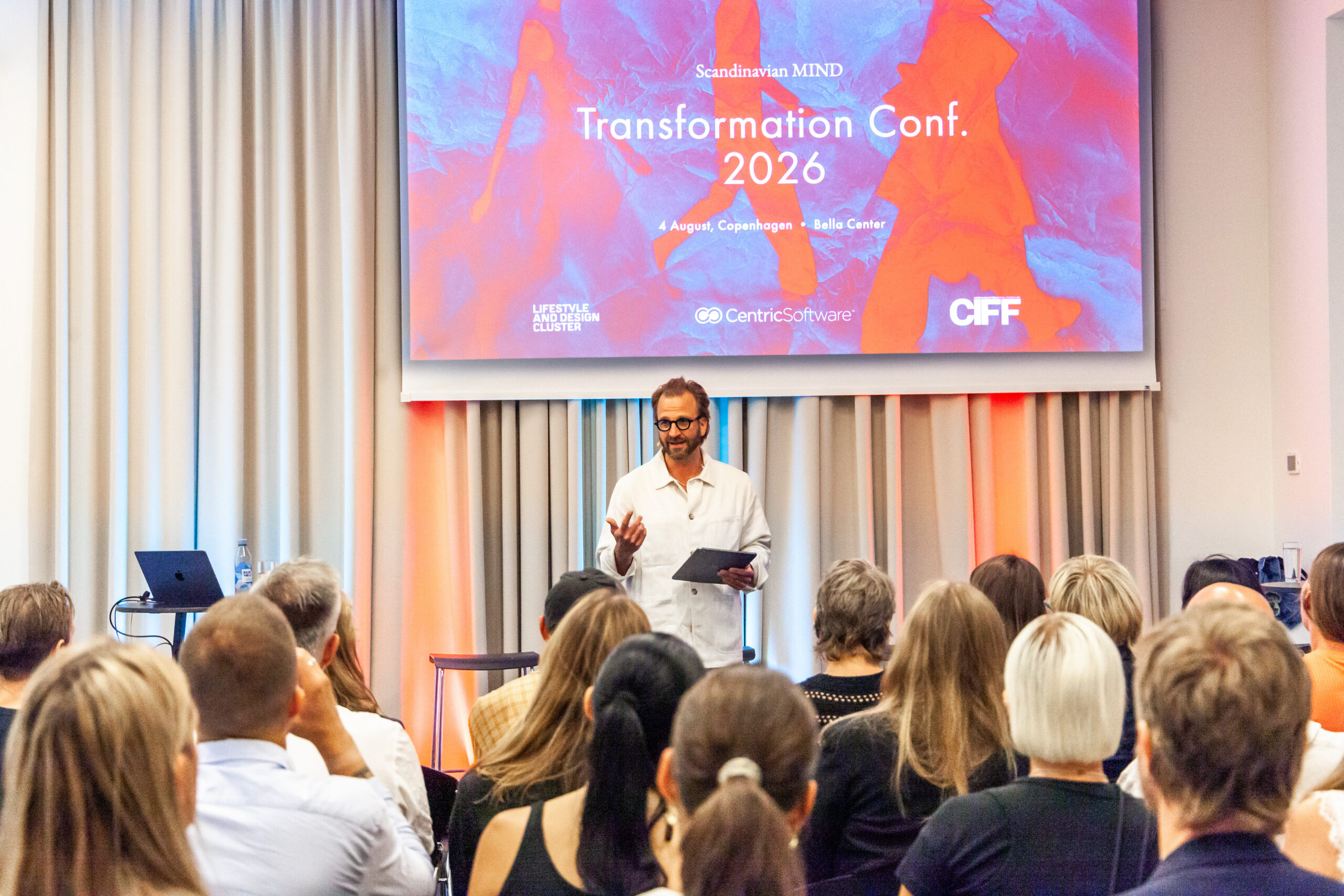


NRF Retail’s Big Show Europe is the Paris edition of the trade show that the US National Retail Federation holds in New York every January. The second edition ran at Paris Expo Porte de Versailles, produced with the French organiser Comexposium. The organisers counted nearly 300 exhibitors and visitors from 70 countries (Comexposium).
It is an American brand run by a French team, and it shows. Many sessions were held in French, which surprised several international visitors. Exhibitors we spoke to said too few brands were walking the aisles. The Nordic presence was thin: a few of the large groups, not many more.
The larger tech companies that already exhibit in New York said they need an equivalent in Europe and are prepared to wait for this one to take root. One of the bigger Nordic fashion groups made the same case: it has to be there to be part of the ecosystem, and the ecosystem will take time to build.
The Innovators Showcase
NRF runs the Innovators Showcase at all three of its shows: New York, Singapore and Paris. In Paris the 25 companies stood in four colour-coded sections: logistics, e-commerce, business analytics and in-store. Most of the pitches involved AI.
A guided tour covers the floor in about an hour, with each company given a couple of minutes to pitch. We took the tour and picked five.
1. Cartesian
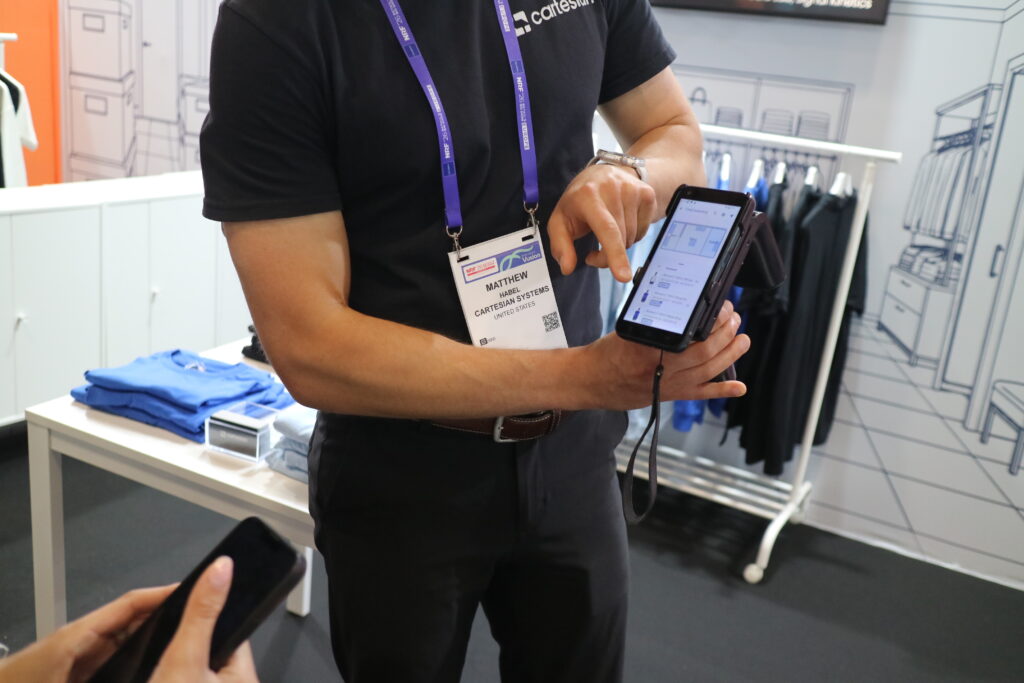
RFID is established in fashion retail, but it has a flaw: it cannot show exactly where a product is in the store or the stockroom. Cartesian solves that. The MIT spinout, founded by professor Fadel Adib and engineer Isaac Perper, has built transformer models that read the radio signals from a standard handheld scanner and place each tagged item in a zone, on a rack or on a shelf. It needs no new hardware and sits on top of the retailer’s existing RFID software. The company says it is deployed in more than 750 stores in 15 countries.
Matthew Habel, head of operations, demonstrated at the stand, scanning a garment as if it had been left in a fitting room:
– I go up to the tag. I hold it. I select the item, and now I know this one came from zone two. So I know immediately where to bring it back.
2. Alpic
When a shopper asks ChatGPT or Claude what to buy, the brand is reduced to a paragraph of generated text. Alpic, founded in Paris in July 2025, builds apps that live inside the assistants, where the brand controls the design, the customer journey and the live inventory data. The apps run on MCP, the protocol that connects AI assistants to outside services, which means shopping agents can use the same connection to order. Alpic logs every prompt and click so the brand can see how these customers behave. A build takes from one and a half to four months, according to the company, which has about 20 employees and counts Kiwi.com among its customers.
– The problem with generative AI today is that the brands disappear under the layers of training data aggregation, says Anastasia Kundush, head of product at Alpic.
3. YesPlz
Standard site search matches keywords and fails when a shopper types an occasion or a mood. YesPlz, founded by Jiwon Hong and Sukjae Cho, builds search trained only on fashion: more than 200 models that read styling, occasion and silhouette from text and images. When fashion retailer Zilo tested it against Algolia, zero-result searches fell from 13% to 3% and search revenue rose 16%, according to YesPlz. Other customers include W Concept and Kolon Mall in South Korea.
– Fashion changes all the time. There’s a new trend, and somebody in the e-commerce team has to optimise the keyword. Our search handles that, says Jiwon Hong, co-founder and chief executive of YesPlz.
4. Artiso
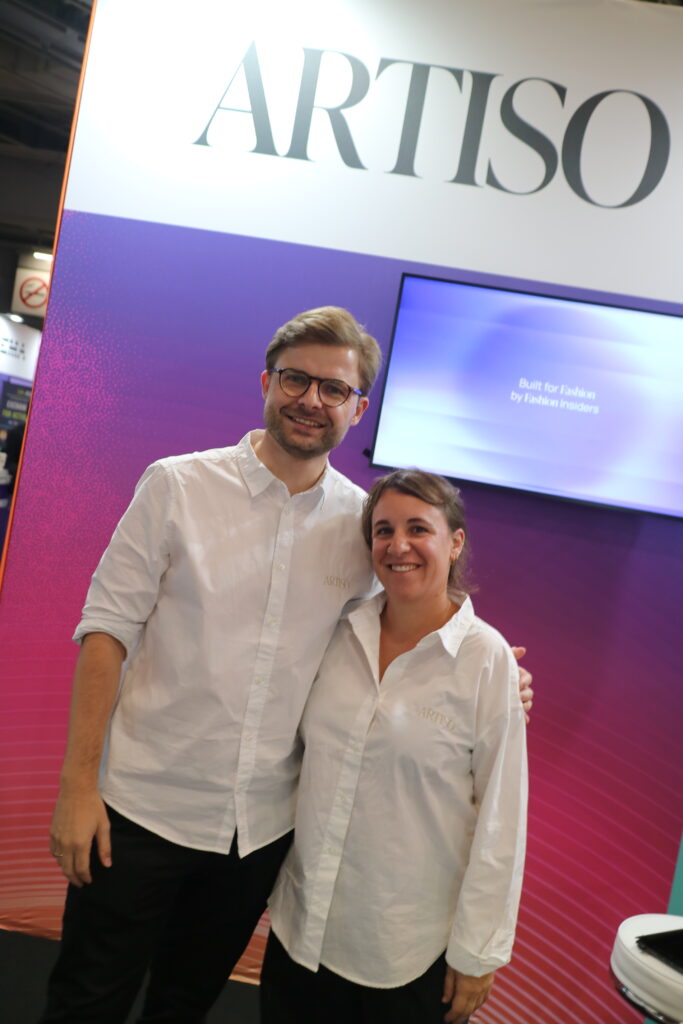
Designers already use AI image tools, but what they make stays on their own computers. Artiso, founded in Barcelona in 2025 by three former Mango managers, puts moodboard, design, prints, tech pack and campaign content into one workspace. The system builds on the brand’s own archive and learns from what each user likes, shares and downloads. The argument is that ideation, collection and shoot can now run in parallel, not in sequence. Deichmann and Trent Limited, part of Tata Group, are named as customers on the company’s site.
– It all stays on the computer of the person. What we do is bring everything together, says Matthias Brenninkmeijer, co-founder and chief technology officer at Artiso.
5. Dema
The only Nordic company of the five began in marketing analytics for e-commerce. Dema, founded in 2022 by Marcus Tagesson, Henrik Hoffman and David Feldell, now connects a brand’s store, e-commerce, advertising and inventory data and lets staff build agents and apps on top of it by writing a prompt. One agent shown at the stand produced a list of which products to move to which store on Monday, with the reasoning for each line: predicted sell-through in the store against the shortfall in the online warehouse. The code behind each agent is open to inspect. Acne Studios, Axel Arigato and ASKET are among the customers the company lists.
– It is an analytical agent that goes through everything. It has all your customer data, store data and online data, says Henrik Hoffman, co-founder of Dema.