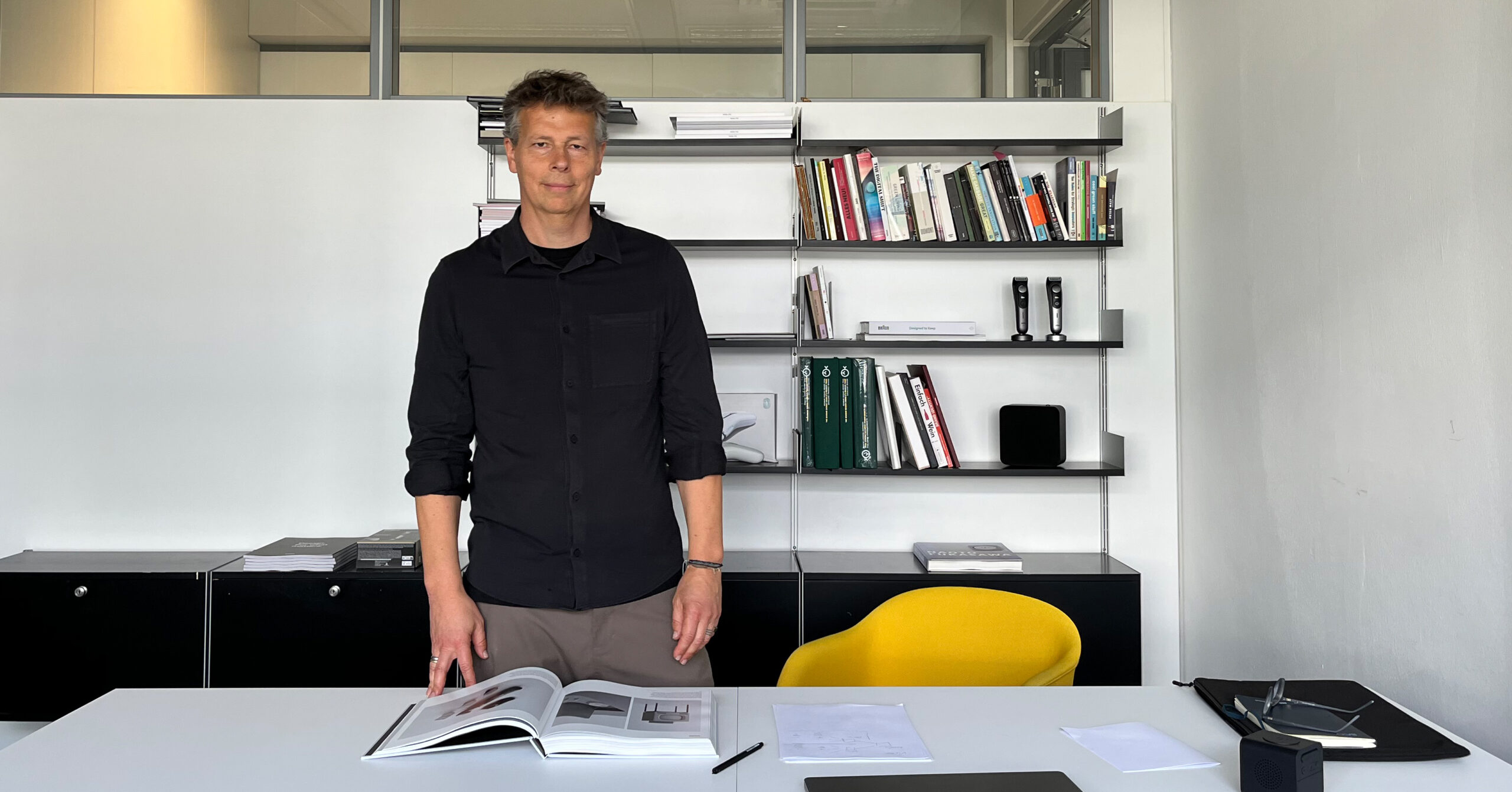


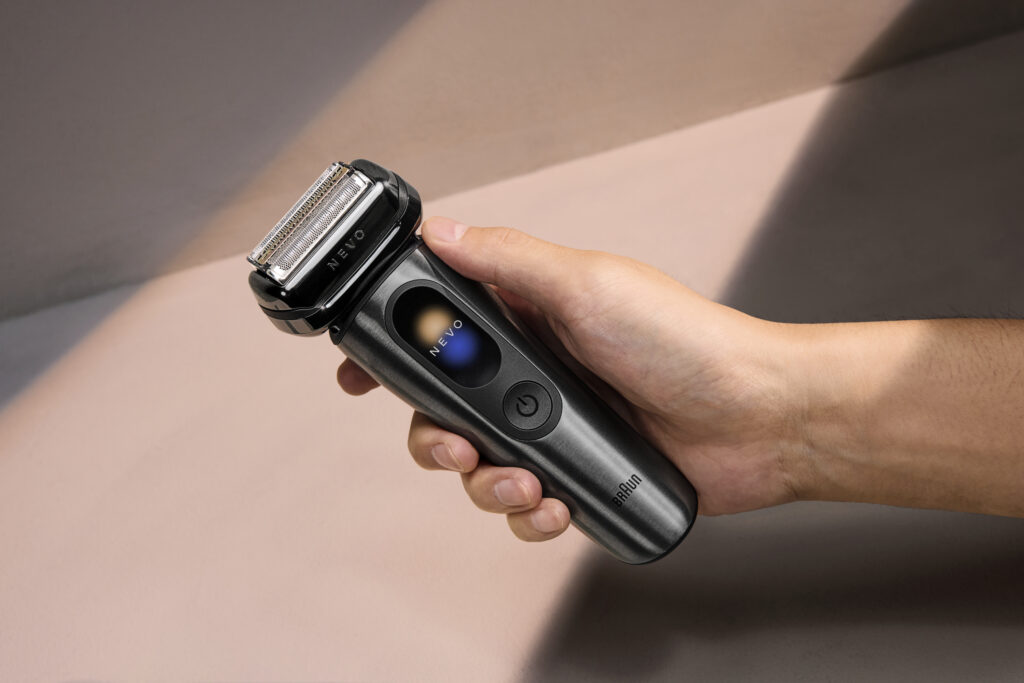
For the launch of its new premium shaver Nevo, Braun conducted a comprehensive global consumer study to gain more insights into how men shave.
— Different cultures have different tastes, so we did tests and collected knowledge in Japan, which is an important market, and across Europe and the US. You would be surprised that there isn’t that much difference; the problems are the same, the need is very similar, says Oliver Grabes.
— We have the Series 9 on the market, and men were quite happy about what they get, but we wanted to hear from current users as well as other men how we can further elevate their experience. What are the problems for them when shaving today? That is constantly changing. If you had asked men five years ago, they would have given you a different answer, which is why this was all about what they think we can still improve.
— Men mentioned three things: Everyone was talking about the friction and gliding, asking us to create something that moves even more easily over the skin. The cutting of the hair is solved quite well — the friction is another thing, especially when it’s humid and moist.
— The second thing was the durability of the product. The consumer groups played back, ‘Can you get us a metal shaver?’ We found a way that incorporates all the high-end technology that’s inside and packed it even more compact and lightweight. It cannot be heavier. It cannot grow the product. Actually, the opposite: new technology becomes thinner and more powerful every time, so making it lighter, smaller, and more powerful is the future.
— The third area was the information about what the shaver does. We heard from men that the LEDs that we’ve used did give them information, but not in detail about what it does. Now, for instance, when you put the shaver into the cleaning centre, it shows exactly when it cleans, when it dries, and when it charges. You feel more informed about how you keep the shaver in perfect shape.
One main thing for beauty and personal care brands today is the rapidly changing consumer behaviour, as well as a new generation of consumers, Gen Z and Gen Alpha, growing up. What are the keys in terms of design to appeal to them?
— That is in two different things. One is the taste topic. What do they prefer, in terms of visuals and how a product should look? And what do they expect of a product? We see that there is a general… I don’t know if frustration is the right word, but men do get tired of products that don’t work well or last long enough. Things break after the warranty, they stop working, or they never worked as well as you thought they would. When you see a product and its design, as you can’t yet experience the product, it’s just a promise of what it will be when you use it. The key, then, is not to overpromise, but to guide the customer into the right experience that he thought he would get.
— A second point to ask is, do I wanna have it around for many years? When you buy an expensive, durable shaver that you can have for a long time, it should definitely be something that you like to have around, to use every day.
What’s the most challenging part of your job?
— Many in my team of designers, design-engineers, and model makers have known each other for years, and there is a high level of trust as well as a shared passion for moving the brand forward. In this creative context, not every strong idea can be brought to life. It also needs to fit the company strategy, priorities, and value creation. Saying no to a very good idea or concept that you strongly believe in can sometimes be challenging.
Does it come with extra challenges to work with design for such a premium-oriented brand?
— It can be challenging when you want to find the perfect solution for something that has not been done before. Then, we come together as a team and focus everyone’s creativity and experience on the topic. This collaborative process continuously pushes designers, engineers, and researchers forward, building on each other’s ideas.
In your daily operations, are AI and other new technologies really helpful, or so far more in an experimental stage?
— AI in the visual field has improved at a remarkable speed, and we now use these tools increasingly, especially to explore ideas and concepts and make them visible in a very short time. However, when it comes to developing detailed industrial design, precision and attention to detail are essential. This is where we rely on the experience of our designers and design engineers, as well as their advanced software and tools. This allows us to create reliable data that we can share with colleagues across R&D and Engineering, or with external partners, to ensure the design intent is fully defined to the smallest detail.
A growing topic is the current and upcoming EU regulations. Do you feel that they limit you in terms of design, or can they create new opportunities?
— We think they play to us. They play to what we have been doing for a long time already. From the first shaver on, we had one screw, and you can repair it. Other competitors just laser things together and weld them. Now, they have to rethink and change that. It’s obviously important that you don’t throw things away that are valuable and repairable.
Overall, what do you see coming in the industry?
— As AI capabilities continue to progress at high speed, we will see these tools become more deeply integrated into every part of product development. They will help accelerate timelines and enable companies to discover solutions that would not have been possible before, including solving complex challenges. The important role for us as humans is to define the right areas of engagement, set meaningful challenges, and ensure that the outcomes solve the right problems while staying within the right set of values, Grabes shares. He continues:
— As a brand representative, start with your brand and what it uniquely stands for, or what it wants to be known for. Define your values and principles clearly. Dieter Rams, for instance, defined ‘less but better’ for Braun more than 50 years ago. Now, it feels more relevant than ever. AI technologies will accelerate creativity and innovation, bringing new ideas faster and more easily, but they cannot replace judgment. It is still our responsibility to ensure that what we create solves a real problem, delivers meaningful value to people, and stays true to the values of the brand. In a world of unlimited possibilities, clarity of purpose becomes even more important.
Related Stories