

Every once in a while, you stumble upon an event that speaks to a shift in the industry. An event that stands out in a sea of bland and formulaic business events, in an industry that seems rife with ChatGPT-written speeches and slick, safe productions.
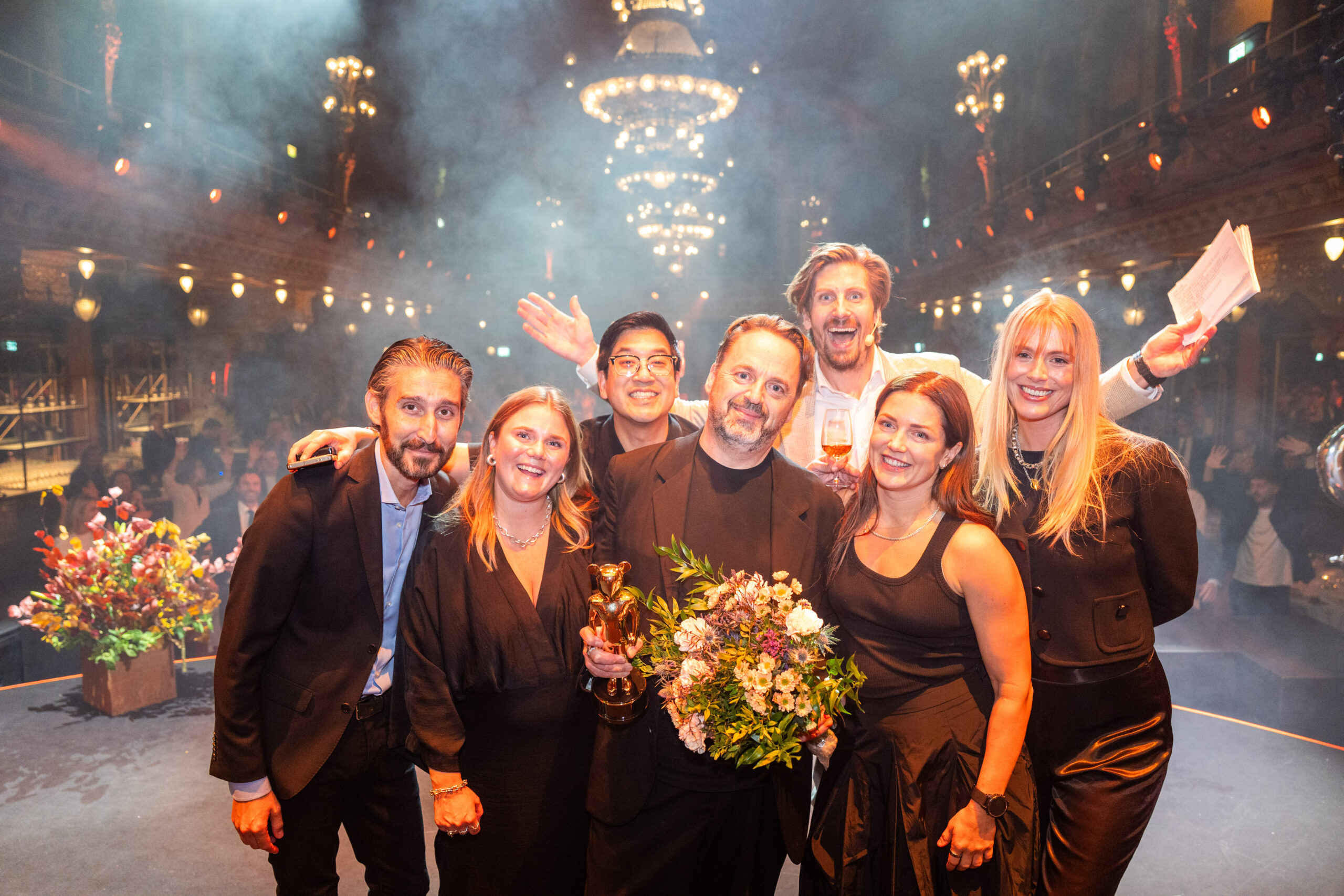
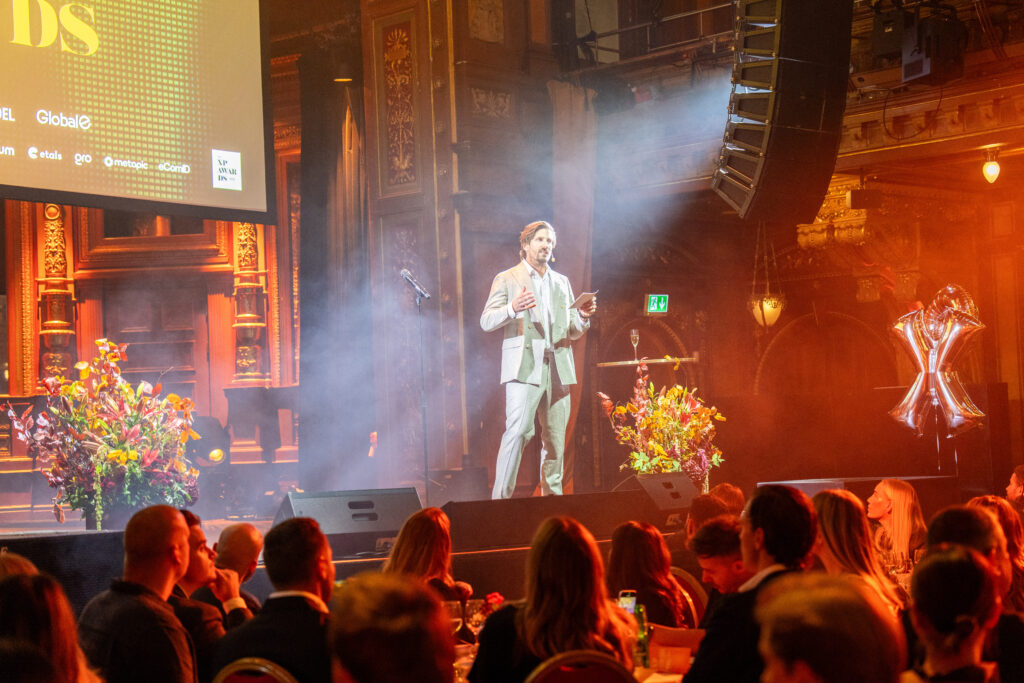
One such event is XP Awards, which took place at Berns in Stockholm earlier in October. Founded by the e-commerce personalities Björn Påhlman Spenger and Jacob Lovén, the event was different in tone and content. The vibe was that of hanging out with friends at a nightclub, the content on stage was deep and informed, and the whole thing felt like a couple of friends had decided to throw the best party they could for their friends.
Which, it turns out, is very close to the truth.
The event was run entirely without an event agency and sprang from the founders’ own perspective. Björn Påhlman Spenger is the founder and host of Framtidens E-handel, a podcast with more than 350 interviews with Nordic founders and business leaders. He is also co-founder and chairman of Fashion Tech Group. Jacob Lovén was one of the first 10 employees at Klarna and founded Den Digitala Draken. Both are investors and entrepreneurs.
This year’s winners were Oscar Jacobson (E-com Brand of the Year), ESSNCE (Marketing Achievement of the Year), Wallism (Innovator of the Year), Nothing (International Success of the Year) and Per Ljungberg (Lifetime Achievement Award).
I sat down with the pair to discuss this year’s winners and why e-commerce still needs its own stage.
Why did you decide to start XP Awards?
Björn: Because the market needs it. Not from a profit perspective, but from a community perspective. XP Awards is an extension of Framtidens E-handel, and it’s not about us. It’s about the Framtidens E-handel community.
When we sent out the invitation this spring, it was a calendar invite to just over 100 people: the A-listers, all the big names in the industry. More than 95 per cent accepted within 24 hours. And it wasn’t an invitation for a couple of hours. It ran from 1pm until 2am. That says something about the community, and maybe also about how much the community trusts Jacob and me.
Jacob, on stage you told a story about an international founder who came to Stockholm a few years ago. Could you tell it again?
Jacob: I think we all have this feeling that there’s something special here. But I didn’t understand the extent of it until someone from outside the community explained it to me. Go back seven years, to 2019. I had just flown in a fashion founder from China. I called Björn and said: why don’t we arrange a dinner so he can meet some of the good people in the industry? So we did. The concept was very simple. We told the people we invited that there were more seats to fill, and that if they knew someone who should be there, they could invite that person, as long as they could vouch for them.
That turned into a very dynamic night, with people coming and going. There were people who had founded billion-dollar companies, people representing large corporations, investors, and a 19-year-old who had founded a fashion company and turned out to be wealthier than all of us put together. Everyone sat at one table with no agenda except sharing insights and knowledge. Very forward-leaning.
A week later I got an email from the founder. He wrote: “I’m still buzzing from what happened in Stockholm.” He said there’s nothing like it anywhere else: a community where there are entry barriers, obviously, because it’s based on trust, but once you’re in there are no barriers and everyone is on the same level. And he wrote: “Make sure you nurture that.” I see XP as our way of nurturing it.
When I invite people from outside the Nordics to my own events, they are often surprised by how open the conversation is, even with competitors in the room. Why is it like this here?
Jacob: I think e-commerce grew up in an environment where its success wasn’t a given. For a very long time it was the new kid on the block, and it had its ups and downs. That builds engagement in the community, because people feel that the main challenge probably isn’t the guy over there who is also trying to sell stuff. Maybe it’s the macro environment. Maybe it’s the established players. So if we cooperate and actually share experiences, we all come out stronger. That built a foundation in Swedish e-commerce. Maybe the foundation itself isn’t unique, but the trust people have in each other is. Swedish trust is a big part of it.
Björn: We have offices in Berlin and in Portugal. In Portugal, the default assumption in business is distrust. It takes several years to build enough trust to do a deal on a handshake. In Sweden, you just assume trust. And assuming trust in business creates insane efficiency.
The other part is Swedish creativity. I spent my first 10 years in Switzerland and went to school there, and it was the opposite of the Swedish school system. Everything was very controlled. We were operating heavy machinery in woodwork class at 8 years old. Then we moved to Sweden and made butter knives until we were 14. I think there’s a reason so many Aviciis and [unclear in recording] come out of Sweden per capita. Same thing with unicorns, and with the gaming industry. Creativity is central to Swedish culture in a way that it just isn’t in Germany or Switzerland, for example.
You are both voices in e-commerce through your podcasts. Yet with perhaps one exception, none of the winners built their success on e-commerce alone. It’s as much about brand and commercial strength across channels. Does it still make sense to talk about e-commerce as a close-knit community, or is this something bigger?
Björn: From the customer’s perspective it’s definitely bigger. Customers have digital and physical touchpoints in many variations: a brand’s own stores, resellers and so on. From the customer’s side it’s an ecosystem. For leaders and entrepreneurs, I think it very often starts in the digital world, because digital lets you scale. And because of that scale, the fastest-growing companies tend to come from the digital space. So I think digital commerce is still relevant, but it’s definitely merging with all the other channels.
Jacob: I don’t want to just repeat what Björn said, but retail is such a big industry. We want to celebrate top performance, and it doesn’t have to come from pure e-commerce players. It’s about people doing something exceptional. It could be a 100-year-old company like Oscar Jacobson, which has gone through a massive transformation and is thriving online, both as a brand and in e-commerce. That is very rare. Physical retail is also still dominated by the ICAs and the big grocery chains. If we had gone broad and said we want to celebrate retail, I don’t think we would have stayed true to our roots, and our roots are in e-commerce.
Jacob, how did the jury reach this year’s winners?
Jacob: This was the first year, so we learned as we went. We were fortunate to have some of the most trustworthy and competent people in the industry: Hanna Moisander, Moon-Suck Song, Jonna Gustafsson and Freddy Sobin. They made the process much easier, because they brought a massive amount of experience, know-how and connections. But they also challenged us on who actually deserves a prize, who has earned it. We had a shortlist that came from the industry and other sources, and we thought we would be done during a two-hour dinner. I can tell you the dinner lasted six hours. Then it continued online, and a few days before the gala we were still debating in our little thread. I love that engagement.
The advantage of a jury of people who are this good is that it isn’t only about pure expansion or pure profitability. Some of these prizes are more about how companies do things, and whether they are changing anything. Take Wallism, Innovator of the Year. There hasn’t been a single article about them. They’re not out bragging about who they are, but what they’re doing with the supply chain in a very old industry, wallpaper, is amazing. They’re reviving old manual factories we thought would be out of work. They’re doing it together with consumers who love the product, and with basically zero waste. If you know supply chains, you know how immensely difficult that kind of result is to achieve. So we went very deep. We didn’t want it to be: there’s been a lot of articles about this brand, let’s give them the award. That was not our approach at all.
One of the jury members was also a winner. How did you handle that?
Jacob: It’s pretty simple. We kept that category completely separate. ESSNCE was a very worthy nominee and made the shortlist, but whenever we discussed that category, Jonna had to leave the room. Obviously she wasn’t allowed to vote in her own category. We made sure there was no potential overlap.
Many tech events feel corporate and increasingly formulaic, almost scripted by ChatGPT. Your evening had a very different energy. Did you plan to do it differently?
Björn: We didn’t think about it. We were just ourselves, both in how we ran the event and in what we said on stage. Ultimately a party isn’t about the hosts, it’s about the guests. People were so happy to be there and had such a good time. They loved the tables they were sitting at, the vibe and the atmosphere. That’s what it was all about.
But the welcome drink was in the nightclub with the music blasting, there were two DJs, and you moderated by waving your arms and getting people to scream. You clearly have your own idea of how this should be done.
Jacob: I think we’re lucky that Björn and I match each other’s energy quite a lot. We also have very little tolerance for things that feel too formalised. One question we bring to everything we do is: does it feel genuine, and does it feel punk? You dress nice and hopefully say smart things, but it still needs to be a bit rebellious, because that’s what e-commerce is about. Everything gets much better with 10 per cent punk. That’s my view.
It comes naturally, because that’s who Björn is, and basically who I am. So we don’t need to think about it. The trust between us is 100 per cent, all the time. We don’t check on each other at all. I did all the production: the video, the visuals, the music, the whole light show. I got zero feedback from Björn, simply because he trusts me. And the same goes the other way: I knew that if I delivered the right energy in the production, Björn would excel, because he always does. Those things together make an event where you can feel that the organisers are doing it out of pure energy and positivity. That’s why we didn’t want an event company behind it. We thought we might lose some of that.
What is the vision for XP Awards from here, and what role should it play in the industry?
Björn: For me, XP Awards was a test of what Jacob and I can do together, because it’s the first time we’ve actually worked on a project together. It showed me that it works, and I’m grateful for the feedback from the community. So I think we’ll do more of it, more regularly and in different kinds of concepts, big and small. But we’ll always keep the XP: doing it our way and holding a very high standard, both in production and in community.
Is there anything else you want to add?
Jacob: I just want to keep building this community. The response has been overwhelmingly positive, pure love, streaming in for the last six days. But that also comes with an obligation. When we come back and do new things, we need to honour that positivity and the community.
Björn: Next year is going to be absolutely insane. We have so many ideas. I’ve been talking to Jacob probably 10 to 20 times a day about what we can do, what we should do and how to package it so it makes sense. We already have about 100 ideas for how to up the game at the next XP Awards.