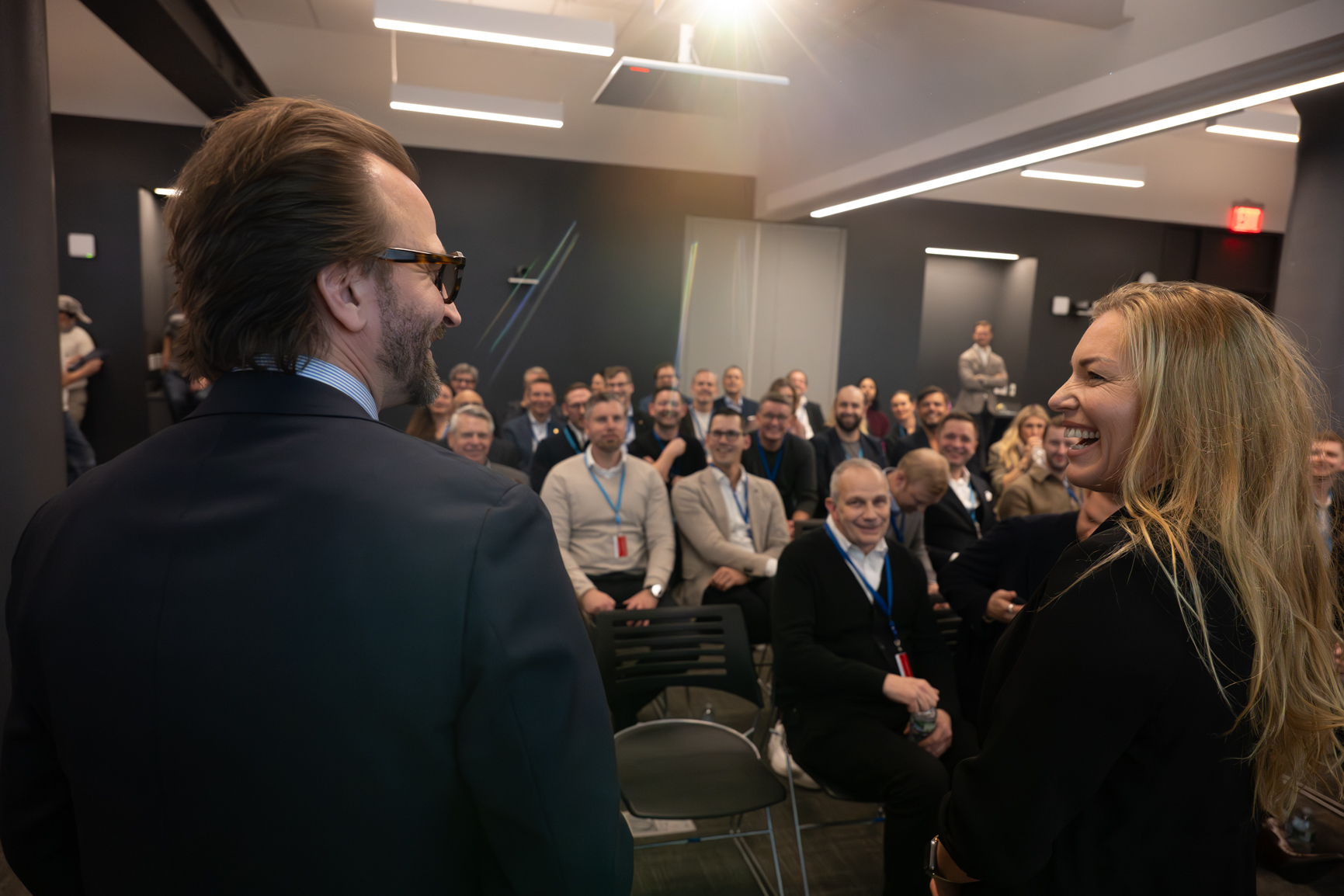
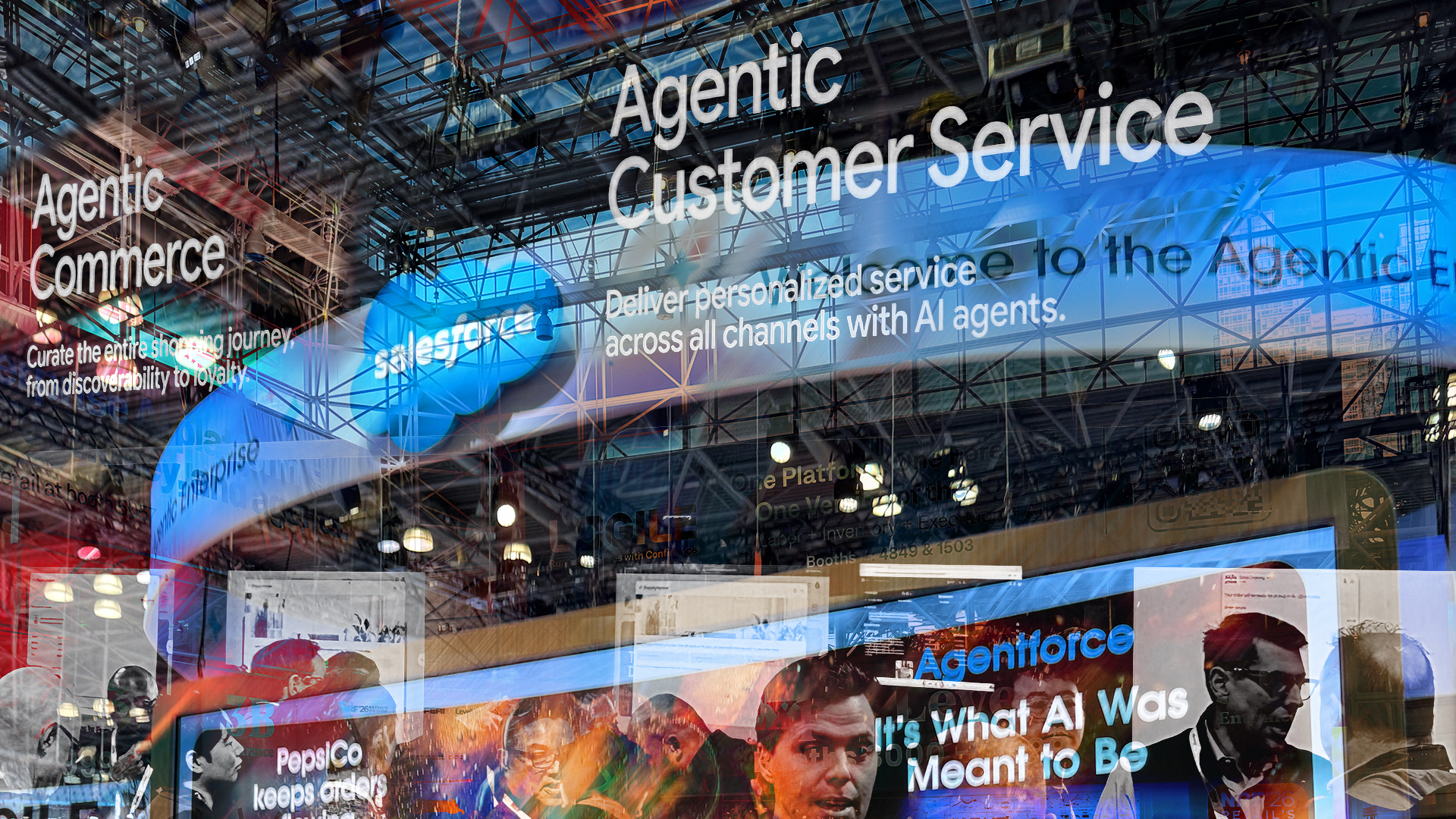
Retail Innovation Talks returned to New York during NRF week, hosted at the Amazon offices in the historic Lord & Taylor building. Together with senior leaders from H&M Group, Lager 157, Kappahl and global tech partners, we explored how to turn data into action, scale transformation, and align profitability with precision. Below you can watch all six sessions.
Opening interview: The retail tech landscape heading into 2026
In this opening interview, Doug Tiffan, Head of Global Solution Strategy for Apparel & Fashion at AWS, outlines the structural shifts reshaping retail as we enter 2026. He highlights how consumer discovery is moving beyond traditional search towards natural language, image-based and agent-driven interfaces, forcing brands to rethink digital visibility.
“We’re data rich, but action and insights poor,” says Tiffan, pointing to the gap between collecting data and turning it into commercial decisions. He also stresses the urgency of adapting to AI-driven discovery: “You got to be ready for that. You got to be discoverable.” For retailers, this means prioritising the data that drives value and preparing for a world where shopping agents increasingly mediate transactions.
From product data to precision
This panel explores how better product data leads to higher hit rates and lower waste. Stefan Palm, Founder & CEO of Lager 157, presents the company’s disciplined “600-600” model: “600 articles, 60% of them are carryovers, and we are aiming for 0% waste.” Precision, he argues, is built into both culture and supply chain.
Daniel Di Benedetto, Regional Director Euro North at Centric Software, emphasises that product clarity must start early: “It’s the product that makes the company.” Together with Doug Tiffan from AWS, the discussion moves from historical trend analysis to AI-supported attribute modelling and lifecycle forecasting. The message is clear: precision is not about removing creativity, but about connecting design, merchandising and data into one continuous decision flow.
Case study: How Promod is empowering stores in modern fashion retail
In this case study, Tim Cave, Vice-President, Consulting Services at CGI, shares how French fashion retailer Promod redefined the in-store experience across 500 stores. By equipping sales associates with unified mobile tools, Promod replaced fragmented POS systems and reduced friction in the customer journey. “Queuing up is not a customer journey. It’s a pain,” says Cave, underlining how operational inefficiencies directly impact satisfaction and sales.
The solution was not simply about devices, but about enabling staff with real-time access to product, inventory and customer data. “Technology must serve people,” he concludes. The results include higher customer satisfaction, stronger employee engagement and measurable commercial improvements, proving that store transformation is as much about culture as it is about software.
From execution to enablement
Moving from isolated projects to scalable capability requires leadership alignment and organisational clarity. Linda Johansen-James, Founder & CEO of International Retail Group, reminds the audience that retail fundamentals still matter: “Imagine that you are a customer.” Ana Friedlander, Strategic Executive at Infor, stresses the importance of strategic direction: “What is your North Star?”
Without ownership and accountability, data initiatives risk becoming siloed tools rather than drivers of change. Christian Haeger, VP & Global Industry Lead for Retail at CGI, adds that inventory accuracy and customer relevance are foundational to data-driven retail. Together, the panel makes the case that execution depends less on technology alone and more on governance, cross-functional collaboration and the courage to break down internal barriers.
Fireside chat: What large-scale retail transformation really looks like
In this fireside conversation, Ellen Svanström, Chief Digital and Information Officer at H&M Group, shares how the company structured its digital transformation for scale. “We have worked very hard on clarity and focus,” she explains, describing a simplified tech strategy built around clear priorities. Through initiatives such as Horizon 3 experimentation and Smart Store deployments powered by RFID and real-time data, H&M is connecting online intelligence with physical retail.
“Having that structure, but being disciplined on it, has really proved to be the difference,” says Svanström. She also emphasises investment in internal capability through a dedicated Tech Academy, arguing that competence development is essential in a fast-moving AI landscape. For H&M, transformation is not a single project, but an ongoing balance between stability and innovation.
The next layer of commerce
In the final panel, the focus shifts to commerce infrastructure and leadership courage. Pim Vijftigschild, Chief Commercial & Partner Officer at New Black, challenges the industry’s reliance on legacy thinking: “Technology is only 15%. 85% is actually courage.” He argues that unified commerce is no longer sufficient; contextual commerce demands integrated systems and organisational change.
Hilbert Dijkstra, General Manager of iD Cloud at Nedap, reframes RFID as foundational infrastructure: “If you still look at RFID as a tool to count once a week, then you’re missing the whole point.” Elisabeth Peregi, President & CEO of Kappahl Group, brings the CEO perspective, highlighting the scale of long-term investments and the importance of aligning technology with clear commercial value. The session closes on a pragmatic note: transformation requires vision, capital discipline and leadership resolve.