


Fashion talks a lot about transformation. But beneath the new tech, new business models, new promises of sustainability, many of the most important conversations remain unresolved. Brands are having them, but often without alignment or the tools to follow through.
We bring those conversations to the table. From AI to supply chains, overproduction to resale, these are the issues the industry finds hardest to move forward on and the ones it can no longer afford to postpone.

Brands aren’t ready for AI to redefine discovery
If it isn’t already, artificial intelligence will act as the decision-maker for many. Instead of manually comparing brands, products or services across platforms, consumers will let an AI assistant do it in seconds.
Discovery is shifting from websites and search engines to AI assistants. That means branding no longer starts on a homepage, it starts with a prompt.
As Erik Vikander of Wilgot put it: ”Websites will die in their current form. AI will become the representation of your brand.”
If your products aren’t described in the right way, if your data isn’t structured, if you lack branding, you risk disappearing from the conversation. In this world, brand identity isn’t just tone of voice and visuals, it’s whether the machines understand who you are.
Conversation to be had: Brands need to invest in structured, high-quality product data and rethink branding as something machines can read and surface.

Fashion doesn’t know enough about its own supply chains
The industry talks endlessly about sustainability, yet most brands can’t trace their own products beyond tier one suppliers. Digital Product Passports will soon expose this gap. By 2027, EU regulation will force brands to disclose exactly what their garments are made of, and from where.
As Staffan Olsson of GS1 Sweden asked: ”How can you give a CO2 number if you don’t even know your suppliers, even what countries they are in, or where the origins are from?” For a deeper dive into this issue, see the Nordic Innovation report here.
DPP isn’t just about compliance. It’s about verification, and right now most brands aren’t ready to back up their claims with facts.
Conversation to be had: Brands need to invest in mapping their full supply chains, educating suppliers and staff, and building DPP-ready data systems before 2027.

Fashion is still flying blind on data and overproduction
Wholesale remains a black hole. Brands ship out millions worth of product and then lose sight of it for an entire season. J.Lindeberg admitted 75 percent of their sales happen without visibility. Impulso called it “pitch black” with billions in goods untracked until markdowns hit.
And then there’s overproduction. We have an industry that has an estimated 40 percent planned overproduction. Not only does this impact the margins negatively but the planet too. Yes, the tools exist. The problem is cultural.
As Laurent Mainil of Markmi.ai, said: ”Changing the minds of people is harder than changing a line of code.”
Until brands are willing to act on data and not just collect it, they’ll keep stumbling around in the dark.
Conversation to be had: Brands need to stop relying on gut feeling and invest in data transparency across wholesale, pricing and assortment, backed by leadership that’s willing to change how decisions are made.
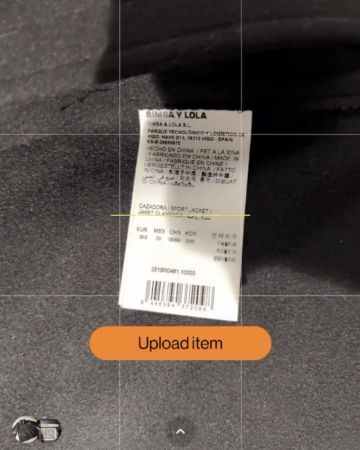
Fashion still treats resale as secondary, even though it is the future of retail
Resale is growing more than 40 percent annually, doubling every two years. Gen Z already sees second-hand as equal to or better than new.
Amanda Thorén of Bencha noted: ”Every brand is already part of the second-hand market. They just don’t earn any money from it.”
That is the uncomfortable truth. Resale isn’t a side project. It’s where growth is happening while first-hand sales stall. The infrastructure to support it exists, but most brands are too slow to adopt.
The opportunity is bigger than second hand. Resale can fuel new sales, reduce returns and build loyalty. And soon, as H&M’s Marcus Hartmann predicted, customers may not even notice the difference. New and resale will sit side by side in the same assortment.
Conversation to be had: Brands need to invest in infrastructure and automation that make resale seamless, treat it as part of core retail, and integrate it into both sales and customer experience strategies.
These are not new conversations, only hard ones, because change is uncomfortable but inevitable. With the right alignment, they can lead to real change.