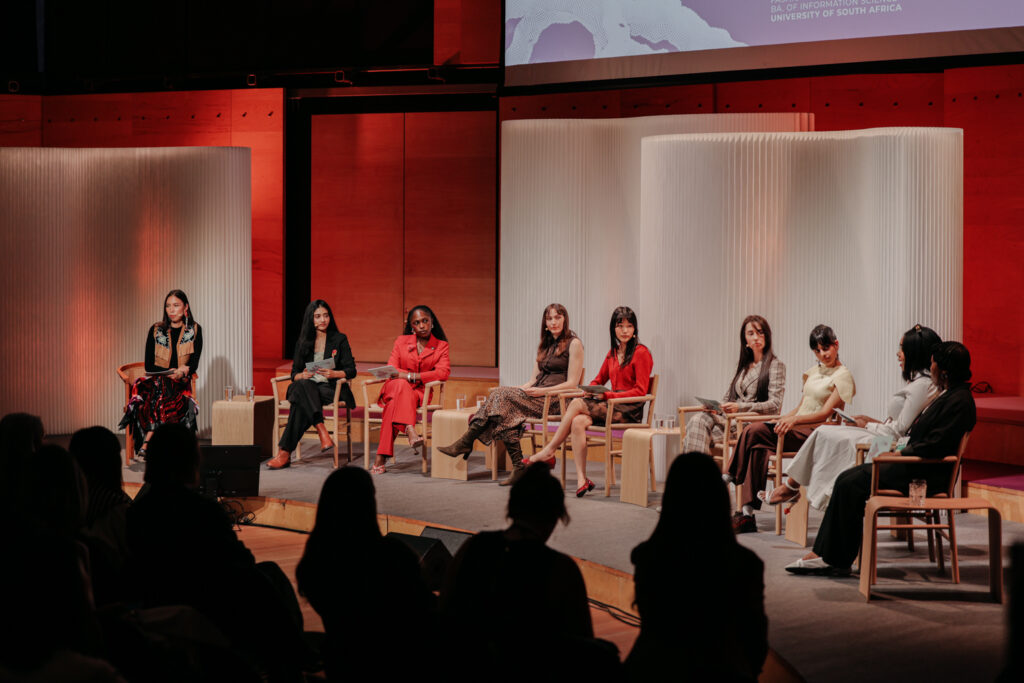


“Fashion currently operates as a linear, extracted machine making it increasingly fragile in the face of climate change, supply chain instability, and shifting global priorities”, was part of the manifesto from the Global Fashion Agenda’s Next Gen Assembly 2026, and at its core it reflected the feeling of the global sustainable fashion ecosystem.
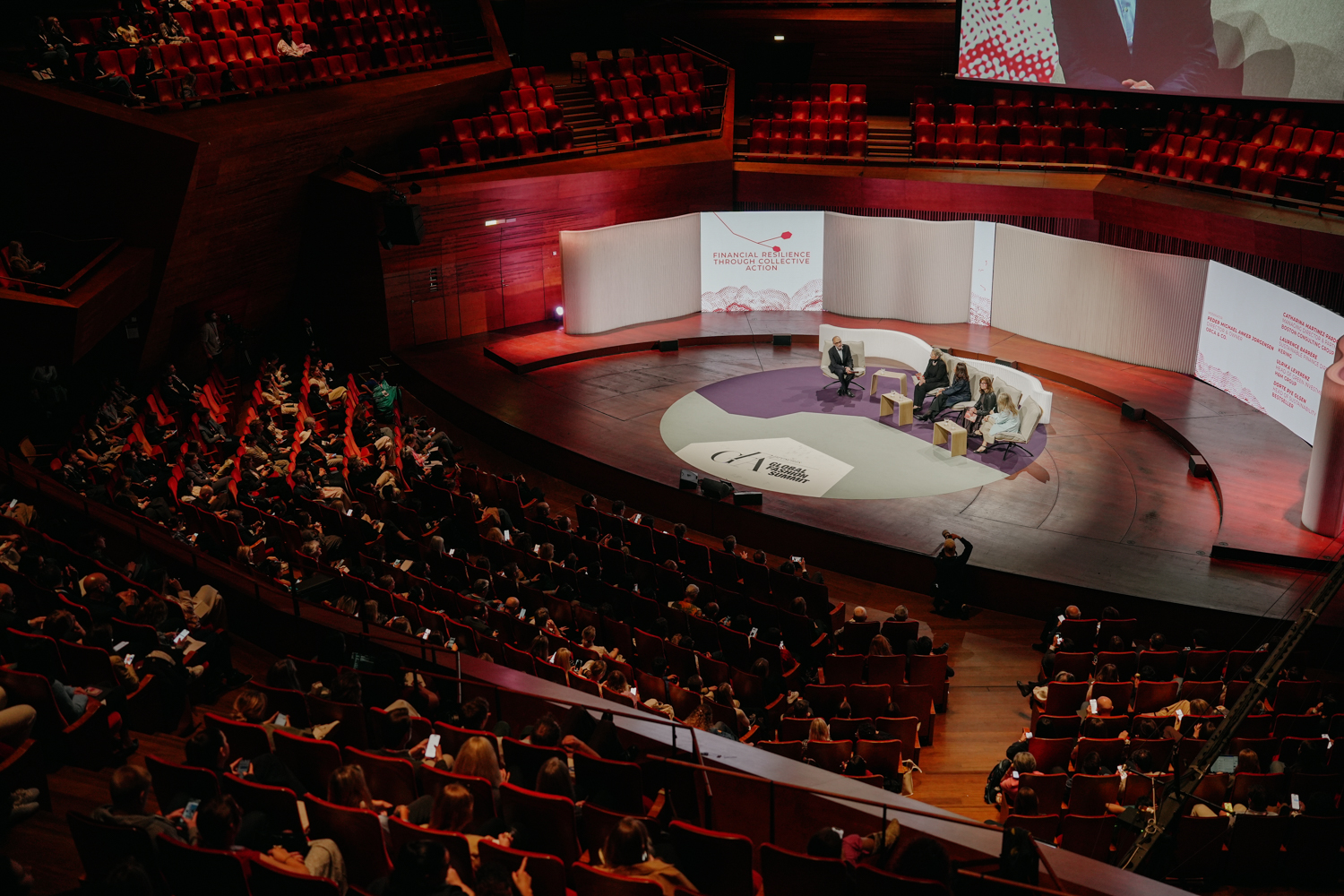
Last week, the Global Fashion Summit gathered 1,000+ industry professionals in Copenhagen to discuss the future of the fashion industry’s sustainability.
The Global Fashion Agenda CEO, Federica Marchionni, highlighted in her opening statement that the fashion industry has an infrastructure problem that needs to be solved with a fundamental reallocation of capital. Funding needs to be redirected to the space that will “determine the industry’s survival: the product and supply chains”. Throughout the conference, the focus was on how to build the fashion industry so many of us would like to witness: a space where products are created with intention, made to last and to be repairable, while keeping materials in circulation through recycling infrastructure, and where the land and soil used to grow our materials is handled with a regenerative mindset.
These were exactly the topics the fashion industry professionals gathered to discuss in Copenhagen.
1. It’s time to reframe sustainability to build resilient futures
This year’s theme, “Building resilient futures”, was reflected in efforts to rebrand sustainability through a new lens. We know too well how much some brands’ sustainability efforts have been driven by media attention and brand image, especially as the topic rose to mainstream conversation. In many ways, this has kept sustainability siloed within marketing and communications departments, far from the finance and business development teams where real strategic decisions are made.
During the summit, Global Fashion Agenda and BCG released the “Fashion CFO Agenda 2026”, a report aiming to bridge the gap between sustainability and finance departments.
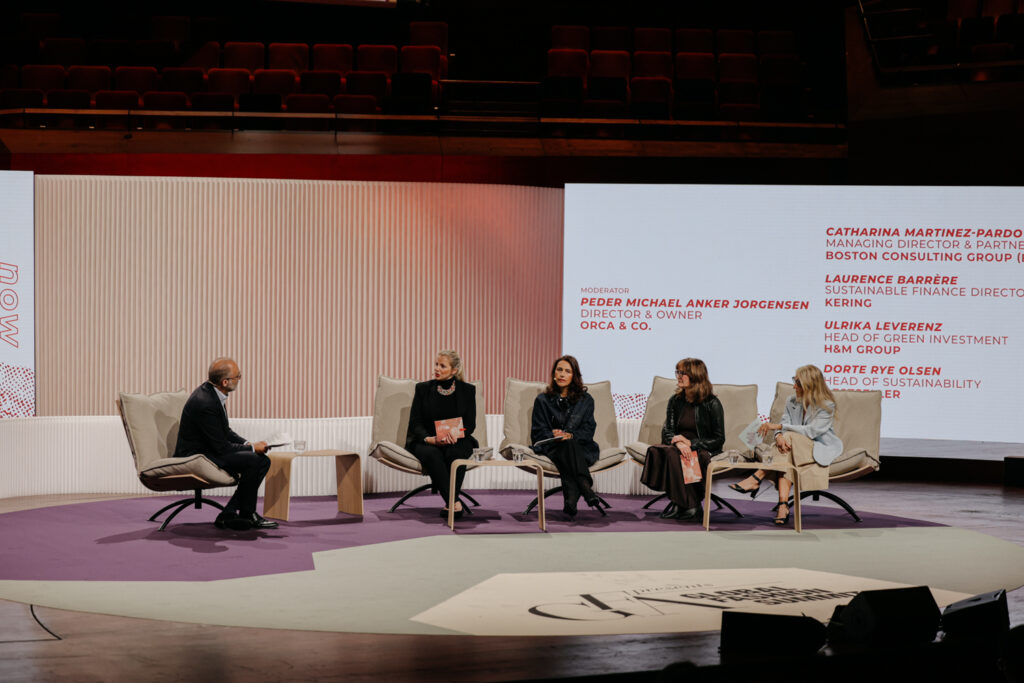
Catharina Martinez-Prado from BCG shared that sustainability is not embedded in the financial processes of fashion companies, and Ulrika Leverenz, Head of Green Investment at H&M Group, echoed the need for that by explaining how to apply it in practice: “we want to reframe sustainability being enterprise risk management”.
The goal communicated was clear: the industry needs KPIs that link financial value to impact. In practice, we need to “count the cost of inaction in sustainability, and if the cost of decarbonization activities is lower, (investment) in sustainability becomes clear math”, as stated by Leverenz.
Naturally, the discussion was also linked to the changing regulatory landscape, and compared to last year’s summit, the focus on regulations had grown even more. In order to build the business case for sustainability, regulations such as the upcoming Extended Producer Responsibility in the EU represent some of the first clear incentives for brands to take action and decrease their regulatory fees. It was echoed throughout the conference that the development of the regulatory landscape is crucial for the business case of sustainability: during a panel discussion on policies as a lever for impact, Wendy Savage, Senior Director of Social Impact and Transparency at Patagonia, stated clearly that “we can’t build resilient futures without policy.”
2. Circularity took the center stage, and the industry builders raised the alarm
During a keynote by Fatih Konukoğlu, the Chairperson of RE&UP, one of the leading textile-to-textile recycler developers, an actual alarm started echoing through the Copenhagen Concert Hall. It was a monthly rehearsal alarm that takes place on the 6th of every month in Denmark, but no one had informed Konukoğlu before his keynote. “That was the urgent call for the situation”, he responded, and the audience started laughing – partly because of the situational humour and Konukoğlu’s wittiness, and partly because everyone in the room knew it to be true.
This humorous accident summed up the current zeitgeist. The urgency for building new infrastructure for the fashion industry hasn’t disappeared. Quite the opposite: in today’s landscape it has become even more important to keep sustainability in the conversation.
But even though we need to spark urgency, everyone working in the fashion system knows that it’s not enough. To change the industry, we need systemic change, and the path to it often feels unclear. H&M Group’s Chief Sustainability Officer, Leyla Ertur, condensed the paradox of the industry trying to build a circular infrastructure into one sentence: “We’ve been working with linear supply chains for over five decades”.
Circularity as a concept was discussed so frequently that it almost became the next buzzword of the industry. Often, circularity was used as a synonym for building textile recycling infrastructure, even though it spans from how we make our clothes to how those clothes stay in circulation and are eventually recycled.
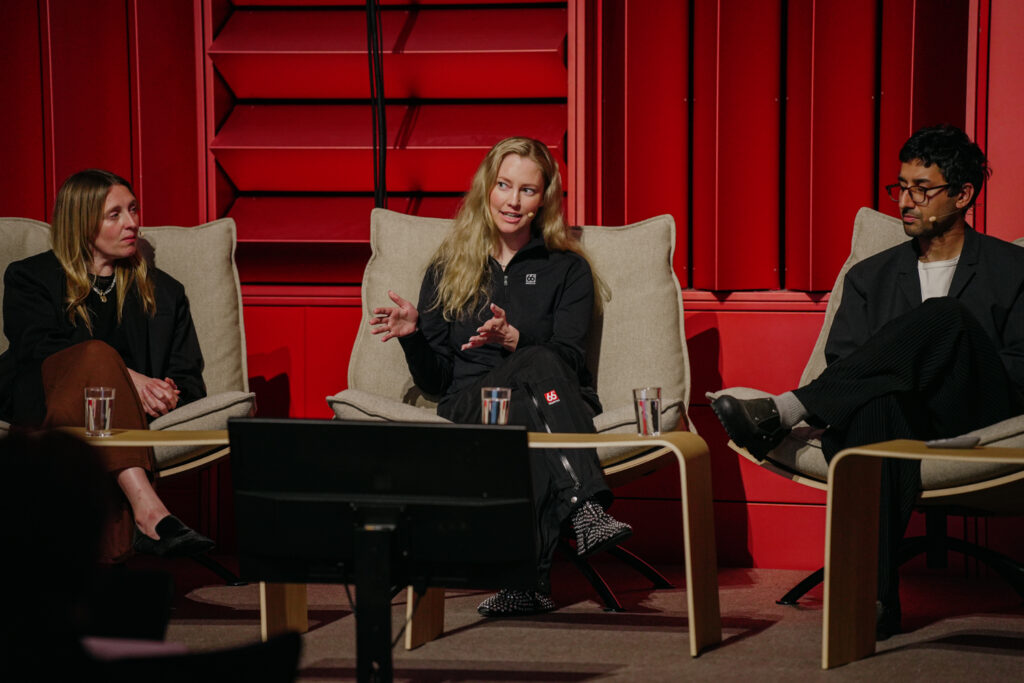
Josefine Laigaard, who previously built the Ganni Repeat program at Ganni and now works as General Manager for 66North, stated that “if we don’t create durable products, we don’t have circular products” in a workshop run by Thami Schweichler, the Founder of clothing repair innovator United Repair Centre. In this workshop, circularity was examined holistically, from the design process all the way through to reusing and recycling products. A core challenge that arose from the workshop discussions was how brands need to define which circularity models and approaches best fit their business. Amy Powney, Founder and Creative Director of AKYN, shared her design philosophy on defining boundaries for designing and operating. At AKYN, they use only four fibers without any exceptions, based on their principles of building a regenerative fashion industry. This boundary helps the brand focus on the circularity efforts that fit their business.
The topic of creating durable products was also linked to regulations. Eunice Cho, Head of Product Development at Ambercycle, a company developing chemical textile-to-textile recycling innovation, stated in another panel discussion that “Extended Producer Responsibility offers a real financial incentive to design in a circular and sustainable way”, as companies are able to pay lower Ecodesign fees when proving the durability and circularity of the garments they produce.
3. The new material innovations require the support of brands
Material innovations have been celebrated and amplified by the fashion industry’s PR for years. But the reality is that next-gen materials and recycled fibers are not yet being used by the industry at scale. The promise of creating materials from mushrooms, seaweed, agricultural waste, or post-consumer textile waste is intriguing, but still in its early days.
During the summit, the call from next-gen material developers and textile recyclers echoed the same pain points: the industry needs more funding, and in order to hit funding targets, brands need to support innovations with future purchasing agreements.
Stephanie Downs, the CEO and Co-Founder of Uncaged Innovations, a next-gen leather material innovator, pinpointed how important it is for brands to “agree to purchasing agreements, even if they would come with restrictions on price and material performance”. In the recycled fiber space, Erik Lagerblad, the CEO of Looper Textiles, highlighted the same point, emphasising that now is not the time for brands to step away from their commitments.
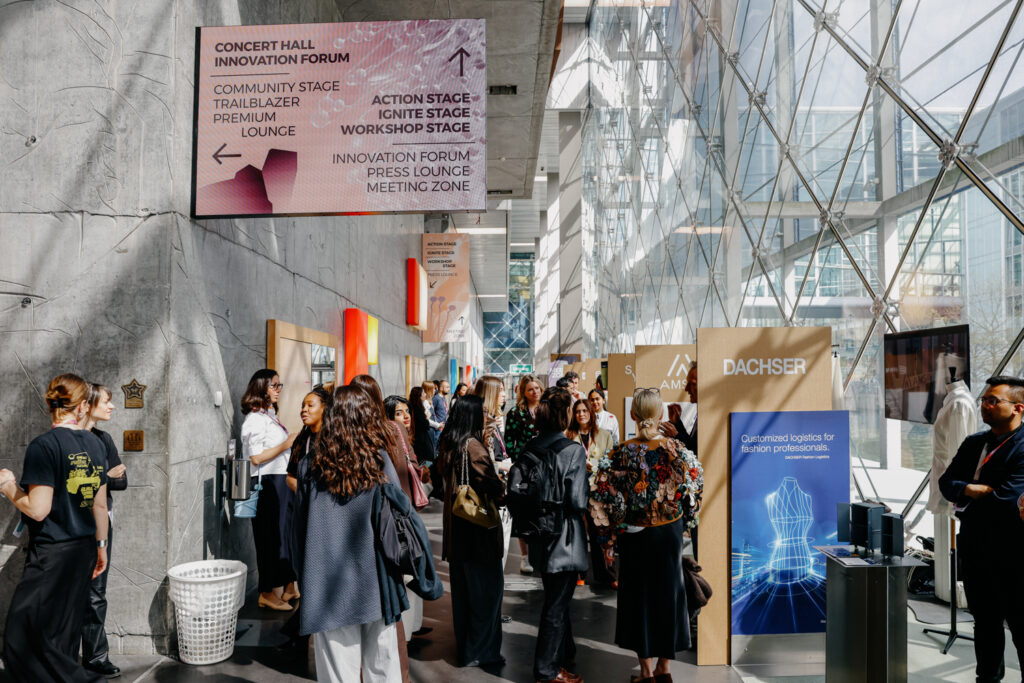
From dye innovations like Everdye and Octarine Bio, to new materials such as AMSilk and BioFleax, and recycled fibers like RE&UP, next-gen materials were prominently featured in the event’s innovation area forum. What became evident from the conversations was that many companies cited integration with existing fashion supply chains as one of their most important goals, both to relieve the pressure of building entirely new supply chains and to offer a path towards a better future for the various players within them.

4. Next-gen builders: Upcycling and reframing fashion as a living system
While many of the difficult discussions at the summit naturally focused on industry challenges, perhaps the most forward-looking and uplifting part of the entire Global Fashion Summit were the perspectives raised by the Global Fashion Agenda Next-Gen Assembly and the fresh angles of the “Recycle the Runway” emerging designer competition.
During the summit, the winner of the “Recycle the Runway” emerging designer competition was revealed: MARTAN, an Amsterdam-based high-end brand that upcycles luxury hotel linens into high-end design pieces. “Virgin fashion should be a taboo. If you make luxury products, meaning products you don’t actually need, there’s simply no excuse to use new material for that,” the co-founder of MARTAN, Diek Pothoven, shared the company’s philosophy along with a call for the fashion industry to reconsider how it makes products.
Upcycling, the act of remanufacturing existing fashion products into new designs, was prominently present among the “Recycle the Runway” finalists. Nearly all of them, including Lucia Chain, Canto Primo, and Sarah O’Neill, worked with existing materials to some capacity and relied on a design philosophy of producing less and using what already exists.
While upcycling may still be underrepresented in mainstream commercial fashion dialogue, it is gaining ground as it earns greater cultural relevance, and certain regulatory changes are creating incentives for it. From July 2026 onwards, large brands in the EU are prohibited from destroying their excess stock inventory, requiring them to find other ways to reutilise products or fabrics. Upcycling can be one outlet for this.
Upcycling was not only highlighted on the sidelines of the Global Fashion Summit, but it was also brought to the main Concert Hall stage. As part of a discussion on the sustainability of luxury fashion with LVMH, an upcycled haute couture collection by Swiss brand Germanier, made from existing products by LVMH’s brands, was showcased. The designer behind Germanier, Kevin Germanier, highlighted that the future of design is not only about upcycling, but also about making products that are durable in both quality and desirability.

Beyond emerging designers, the summit’s Next-Gen Assembly gave the spotlight to other young changemakers in the fashion industry, where the group shared their co-created perspective on the Global Fashion Summit’s central question: “How can fashion adaptation build resilient futures?”
The assembly shared their manifesto, which “reframes fashion as a living system”. It acknowledged the structural issues discussed throughout the summit: “Fashion currently operates as a linear, extracted machine making it increasingly fragile in the face of climate change, supply chain instability, and shifting global priorities.”
Yet compared to the dialogue from major fashion brands at the summit, the Next-Gen Assembly focused more precisely on the need to reframe a system that operates from a space of speed and profit. Fashion should transform into a system that centres collective action over individual, people over profit, stability over efficiency, and working with nature rather than extracting from it.