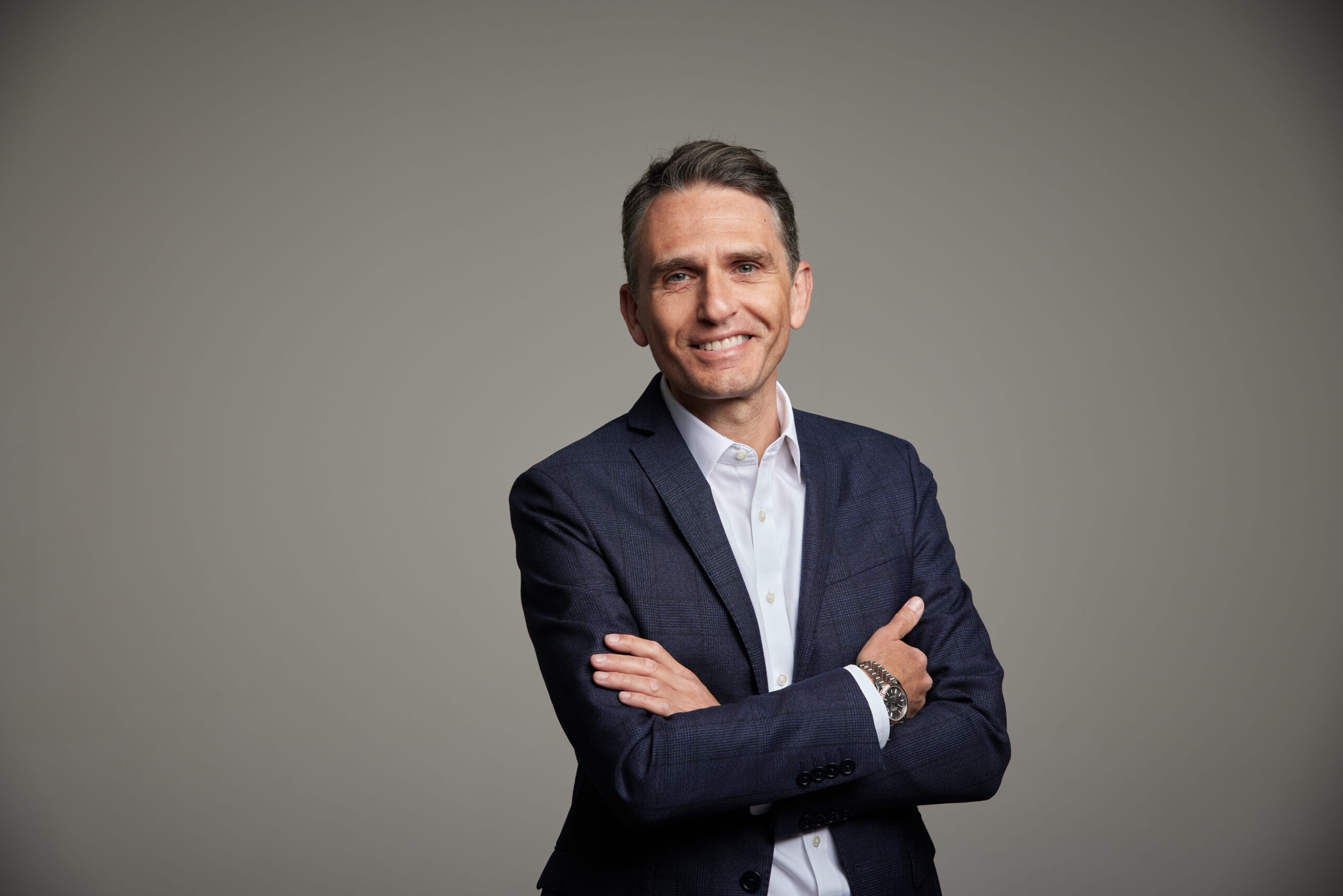


Three years ago, Stefano Genco joined EssilorLuxottica to start building the foundation for the new healthtech brand Nuance Audio.
— We started building our own supply chain. When you have to deal with electronic devices compared to standard glasses, there are, of course, different needs in terms of security. Everything was a challenge for us. More than 80% of our glasses come with prescription lenses. For the first time, we’re able to mount them at the store premises, not at the production facility, so we needed to teach how to mount lenses on a piece of electronic.
Can you take us through the technology behind it?
— There are six mics that are able to capture everything around you, and, thanks to algorithms, they amplify just what you see. After capturing everything, the algorithm is calculating and considering where the sound is coming from, also considering the delay for when the sound arrives at the different mics. It’s quite complex, but if you are talking from a certain direction, the sounds will arrive at certain places before others. The two mics here will receive the voice at the same time; there are no millisecond delays in between. If two people are talking at the same time, the algorithm decides that it is one voice and not the other’s.
— Once the system recognises a certain voice, it comes through the glasses. Then, right and left, there are two very small speakers that are able to deliver the sound directly to the ear without amplifying it for the rest of the people who sit close. That’s why no one will know that you have it.
A little bit over a year ago, when the first prototypes arrived, Nuance Audio created a panel of experts. Audiologists, clinicians, and several professors were asked to test, share what was wrong, and what needed to be fine-tuned.
— As mentioned, there have been many challenges, with the most relevant one being the miniaturisation of everything. My boss told me that, first of all, I needed to manufacture a super nice pair of glasses. But the first seed of Nuance was super bulky. Today, it’s a normal pair of glasses, weighing 39 g (compared to 40 or 41 g, which is the average of the millions of glasses manufactured by EssilorLuxottica, Ed’s note), but that was a clear challenge.
— And so were the compromises with the battery. We wanted to grant eight hours of usage, since all our data were saying that, on average, people who wear traditional hearing aids wear them for six to eight hours. We reached it, but it was very hard; we met so many manufacturers of batteries to find the right one. This miniaturisation and the batteries remain the biggest challenges for the future. The more technology you want to introduce, it still has to fit into a pair of glasses.
— When we started, Genco remembers, we were very good in manufacturing glasses. The hinges that we use cost a lot and are very difficult to find in a pair of glasses, but we know how to mount them. That, and everything related to the traditional glasses, was, in a way, easy. Coming to the technological and audiological part, we had issues with everything and changed all parts two to three, or many more times, to achieve a certain performance in the final product.
Do you have any specific memorable moments from the development process?
— When we were waiting for the FDA approval, the due date was on a Friday, on February 1st or 2nd, and at 6 PM in Italy, we had not received any clearance. The process was around 150 days, and this was the very last day, so we said, as a team, ’OK, but they are in the US, so let’s give them another 6 hours.’ At midnight, it was 6 o’clock there, and they were closing the offices at the FDA, so we said, ’maybe they will tell us on Monday’, but then, ’maybe this means that they are going to reject us.’
— I sent an email to the most relevant guys in my company, including the CEO, the deputy CEO, and said, ‘see you on Monday,’ at 1 AM between Friday and Saturday. Then, at a certain point, I received a text because I had left my mobile phone switched on, with one of the guys who was right outside the FDA door. ‘We got it, we got it!’
— For me, of course, it was an amazing moment. Then I said to myself that for sure, the whole company is now sleeping, but I was so happy and excited, not able to sleep anymore, so I sent an email to them. I can tell you that in a second, everyone replied ’wow!’ No one was sleeping! We were waiting as a company. Even our CEO and deputy CEO, who are managing a company of 220,000 people. It was a memorable moment.

If you look at the medtech industry, what are the hot topics now? And what can we look forward to?
— The challenges when it comes to something that is wearable are always the same; you need to have smaller devices with more functionalities and a decent battery life. If you look at the future, artificial intelligence is something that everyone will introduce or is already introducing. And so are we: a few months ago, we acquired Pulse Audision, a French startup specialised in artificial intelligence in hearing.
— The next level? Let’s imagine, as we said, that you are the source that I wanna listen to. Suddenly, a baby starts crying. The cry of a baby is something that is already unpleasant, but let’s imagine having it amplified. Thanks to the artificial intelligence, we will be able to carve out thousands of noises from the amplification that are unpleasant. This, however, is a journey, not happening tomorrow.
In terms of consumer behaviour, we have smart watches. In a few years, the many may have brain chips. Those, however, are mainly for a younger audience, while your target group is slightly older. What are the keys for the elderly population to adapt to wearables?
— Nuance will never have a ’Meta style’ (referring to the EssilorLuxottica brands collaborating with Meta on special wearables) with the possibility to take video or pictures with instant publishing on Instagram. The world is going in that direction. But if you need invisibility — and we need that — you must have a style like this, not cameras. Nuance will integrate sensors that are useful for that age, like posture sensors, fall detection, blood pressure, temperature and body temperature, and steps. Let’s see, the main feature that you have here, in your smart device, will sooner or later be translated into a pair of glasses, Genco concludes.