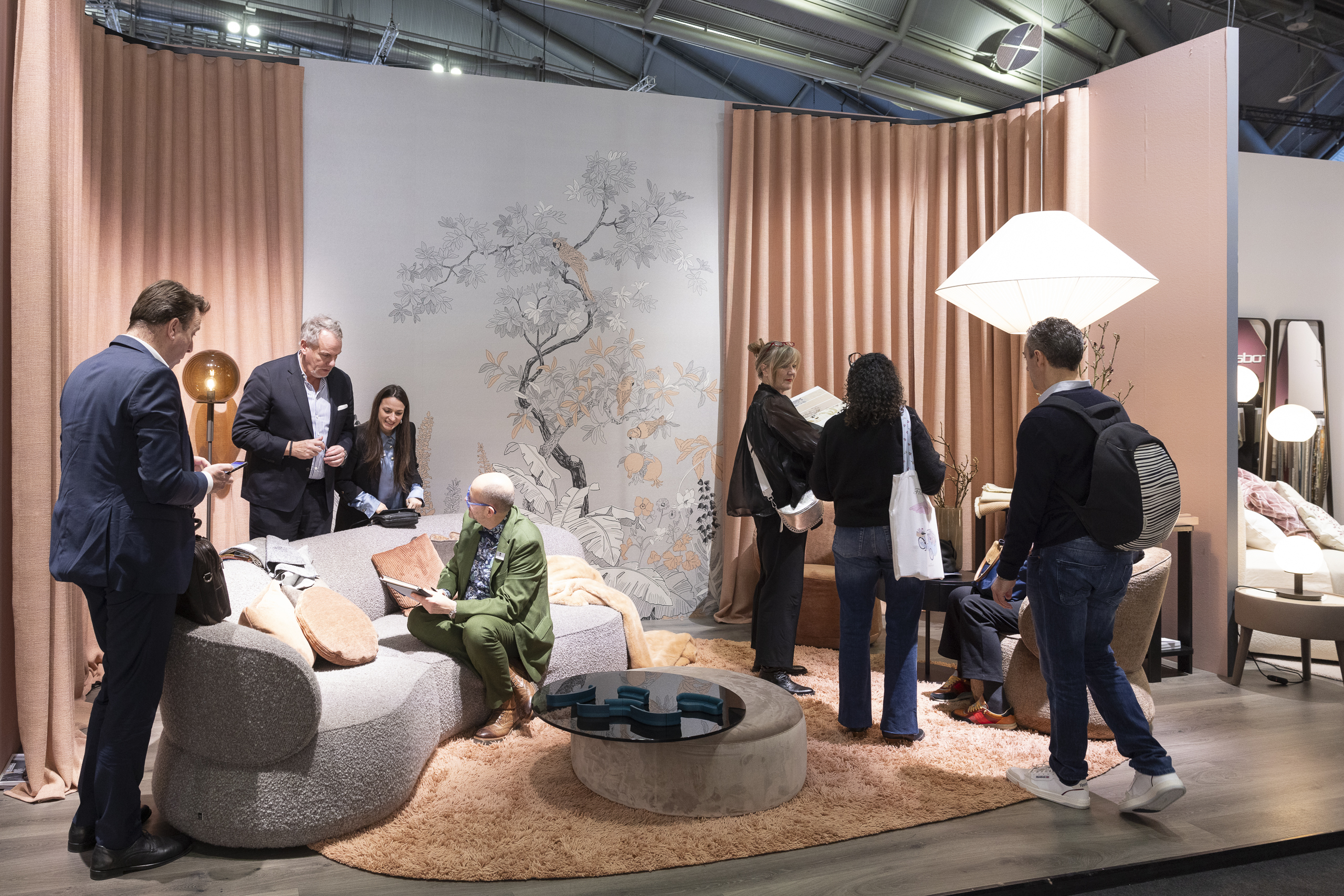


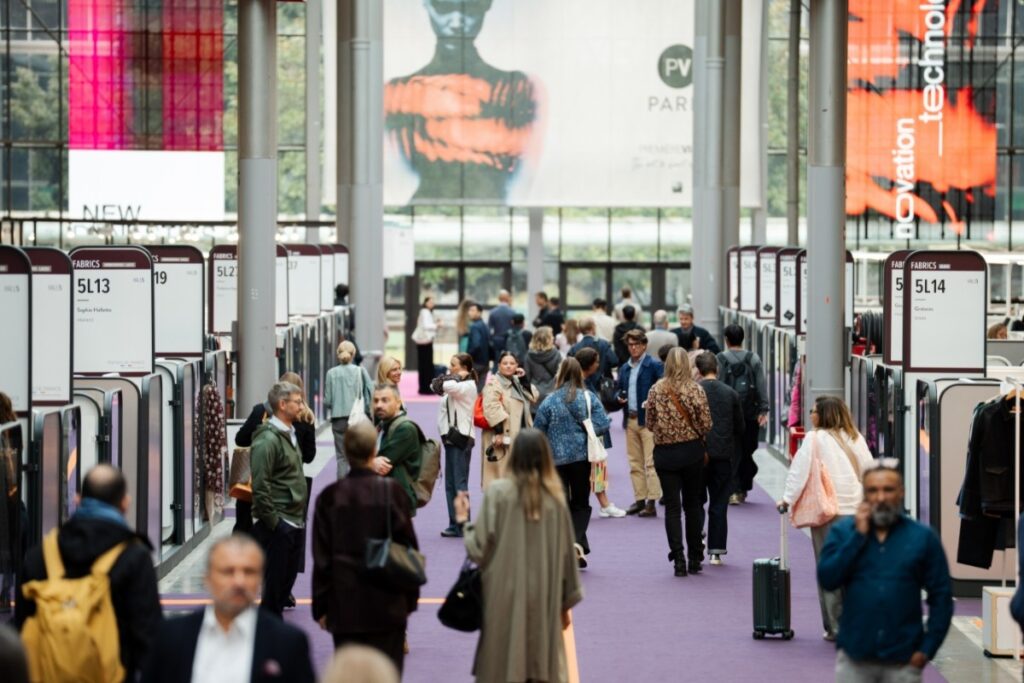
Première Vision is a global meeting place for the fashion and textile industries, twice a year in Paris as well as through international events, bringing together the entire value chain, from raw materials to finished products, from craftsmanship to innovation.
— The international dimension, I’d say, is what makes Première Vision unique, says Yann-Brieuc Chevallier, Head of PR for Première Vision and the Fashion Division of GL events. Every country, every expertise, every culture of textile creation meets here. It is the one place where brands, manufacturers, suppliers, creatives and decision-makers from around the world come together at the same moment. It is not only a sourcing event; it is where discussions happen, where the industry exchanges, and where key decisions are made.
— This coming edition in Paris, February 3-5, embodies that role, with a strong editorial theme, a highly curated offer, and a comprehensive program designed to help the industry move forward together.
When you speak with companies, exhibitors, and industry players, what are the hot topics?
— Today, discussions within the textile and fashion industry are marked by multiple converging pressures. Sustainability, regulation, and responsible production are no longer separate subjects; they form one single, complex equation that companies must solve while remaining competitive.
— At the same time, the industry is facing an urgent need to address fast fashion models, both economically and environmentally. Volumes, speed, pricing pressure, and overproduction have created fragile supply chains, and many players are now questioning long‑established practices.
— On top of that, there is a very strong sense of uncertainty. Market instability, geopolitical tension, and shifting consumer behaviour mean that decisions are increasingly made at the last minute. Where companies once had visibility one year ahead, many today don’t even know one season in advance how volumes, prices or orders will evolve.
— In my opinion, in this context, events like ours have become absolutely essential. Exhibitors and visitors need a place to take the pulse of the market in real time, to understand what is new, what is working, and what is changing, but also to meet their peers, exchange insights, and collectively navigate this instability.
And what are the key focus areas for them to focus on in order to remain relevant in an increasingly competitive industry?
— The industry’s needs are incredibly varied. Remaining relevant today means first and foremost being able to listen, observe, and connect. Companies need to constantly take the temperature of the market by speaking with suppliers, brands, manufacturers, designers, and technologists across the value chain.
— It is also about staying creatively sharp. Inspiration is no longer optional; it is a strategic necessity, and creative renewal is key to relevance.
— And finally, relevance is built through exchange and networking. Sharing challenges, confronting visions, and learning from peers is essential.
What are the rising industry topics and coming macro trends?
— The accelerated rise of technology and innovation; new materials, smart processes, traceability tools, digital solutions, production technologies and creative innovations are transforming the way we design, manufacture, and distribute fashion. Innovation is happening at every level of the value chain.
— The rapid growth of the second‑hand and resale market is deeply changing the way consumers perceive products. When buying a garment today, more and more consumers are already thinking about its future value: how long it will last, how it will age, and how easily it could be resold later. This fundamentally shifts expectations around quality, durability, and design.
— As a result, fabrics and garments must be conceived to stand the test of time, both physically and aesthetically. Longevity is becoming a key value driver that is not only environmental but also economic. In a year from now, we will certainly be discussing how brands integrate durability into design, and how materials and savoir‑faire respond to this new mindset.
Finally, what else is on your mind now?
— The theme of our February edition is Territories of Savoir‑Faire. Japan, for instance, embodies a culture where objects, textiles, and garments are made to last. Durability, respect for materials, and long‑term value are at the core of Japanese craftsmanship, offering powerful inspiration for today’s challenges, says Chevallier. He adds:
— The key message is that many answers already exist within existing savoir‑faire. By looking at territories, cultures, and crafts from around the world, we can rethink our practices, improve our models, and build a more resilient, meaningful and sustainable fashion industry.